
Goethe wrote that Italy without Sicily leaves no image in the soul. He was right, but he might have added: Sicily without a car leaves no island at all. The rail network here connects Palermo, Catania, and Messina, and little else. The bus routes link the main towns on a schedule that belongs to a different era. And the places that make Sicily extraordinary — the Greek temples at Selinunte standing above the sea, the baroque hill towns of the southeast, the volcanic slopes of Etna, the salt flats and windmills of Trapani, the villages of the Madonie and Nebrodi mountains — are unreachable by any means other than a car.
Sicily is the largest island in the Mediterranean, roughly the size of Massachusetts, and it contains within its borders three thousand years of layered civilisation — Greek, Roman, Arab, Norman, Spanish — and a natural landscape that shifts from volcanic highlands to golden beaches within a single hour of driving. To understand Sicily, you need to move through it. To move through it, you need a car. And to get the most from the car, you need someone who knows the roads.
There are places in the world where the journey between destinations is as rewarding as the destinations themselves. Sicily is one of them. The road from Palermo south to Agrigento crosses a landscape of wheat fields, clay hills, and ancient farmsteads that has barely changed in centuries. The coastal road between Cefalù and Palermo runs along a stretch of coastline so beautiful that you stop the car simply to look. The drive up the flanks of Etna, through forests of pine and birch that give way to black lava fields, is unlike anything else in Italy.
This is why a Sicily self-drive tour is not just a practical choice — it is the choice that makes the journey itself part of the experience. The train from Palermo to Agrigento takes two and a half hours and runs twice a day. The car takes the same time but stops wherever the landscape demands it, on a schedule that belongs entirely to you.
Western Sicily feels like the edge of Europe. The Valley of the Temples at Agrigento — seven Greek temples on a ridge above the sea, a UNESCO World Heritage site of extraordinary scale — is the most impressive Greek archaeological site outside Greece itself. Selinunte, further west, is larger and less visited: enormous temple ruins in a landscape of silence and sea air. Trapani, on the northwestern tip, is a port town of real character, with a seafront lined with coral-coloured buildings and a cuisine that reflects centuries of Arab influence — couscous di pesce, almonds, saffron. The salt flats nearby, with their ancient windmills, are one of the most photographed landscapes in Sicily.
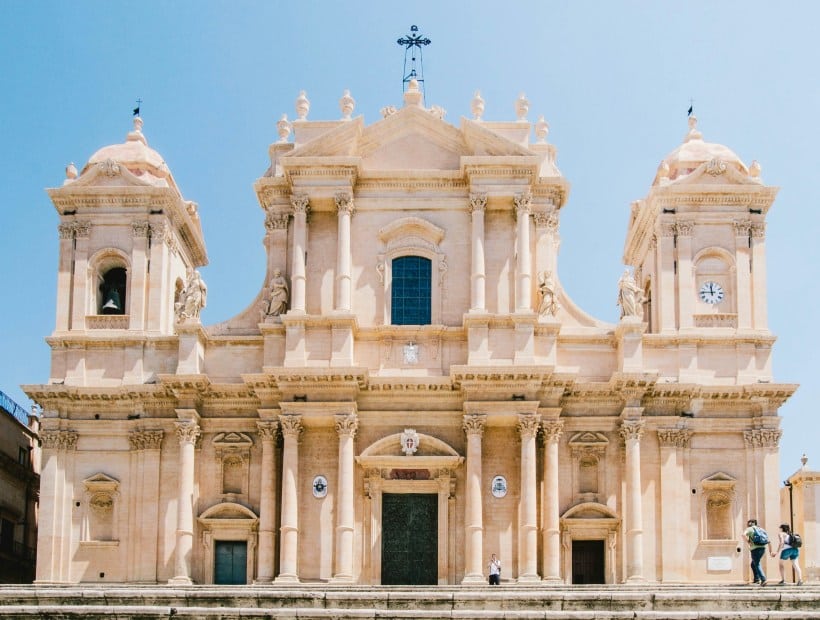
After the earthquake of 1693 destroyed much of southeastern Sicily, the towns were rebuilt in a single burst of baroque energy. The result — Noto, Ragusa Ibla, Modica, Scicli, Palazzolo Acreide — is a collection of honey-coloured towns so consistent in their beauty that UNESCO designated the entire area a World Heritage site. Driving between them through the Val di Noto, stopping in village squares where the light turns the stone to amber in the late afternoon, is one of the most pleasurable journeys in the Mediterranean.
The eastern coast is dominated by Etna, Europe’s tallest active volcano and a presence so powerful that it shapes the weather, the wine, the agriculture, and the psychology of everyone who lives within sight of it. The drive around its slopes — through lava fields, vine terraces, and chestnut forests — reveals a landscape that changes completely every few kilometres. Below Etna, Taormina perches on its cliff above the Ionian Sea with a Greek theatre that frames the volcano in one direction and the sea in the other. Syracuse, once one of the most powerful cities in the ancient world, still has an island centre — Ortigia — of extraordinary beauty.
The Sicilian interior is the part of the island that most visitors never find, and the part that stays with you longest. The road through the Madonie and Nebrodi mountains crosses a landscape of forests, high pastures, and medieval villages where the pace of life has changed less than anywhere else in the island. Caltagirone, with its extraordinary ceramic staircase. Enna, the highest provincial capital in Italy, visible from half the island. Piazza Armerina, whose Roman villa contains the finest floor mosaics in the world. These are the places that only a car can reach, and only a car can connect.
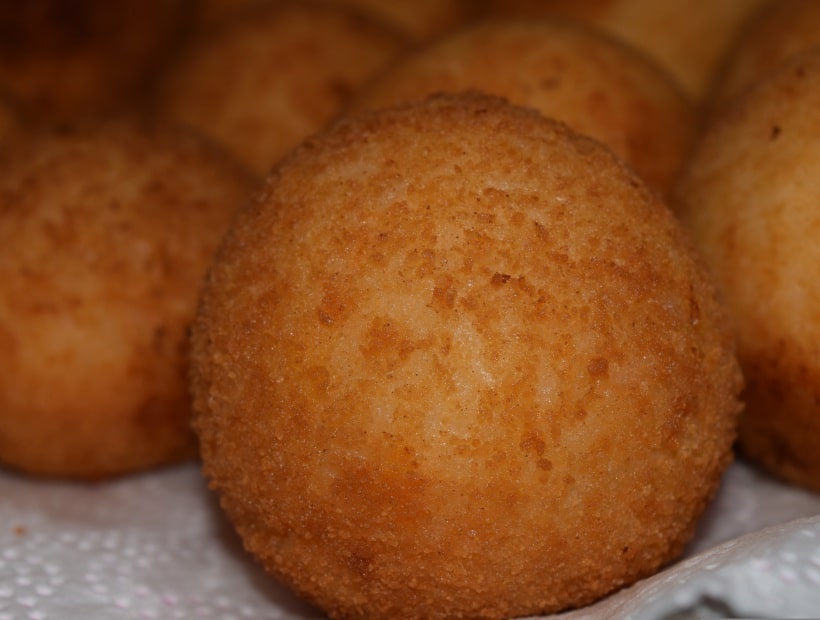
Sicilian cuisine is a living archive of the civilisations that have passed through the island. The Arabs brought almonds, citrus, saffron, and the technique of making sweets from sugar — and Sicily’s pasticcerie are still the finest in Italy. The Greeks brought olive oil and wine. The Normans and Spanish left traces in the cooking that are still visible today. Arancini, pasta alla Norma, caponata, sarde a beccafico, raw red prawns from Mazara del Vallo, granita with brioche for breakfast, cannoli that shatter when you bite them — Sicily’s food is not a cuisine you taste. It is one you remember.
Spring (April–May) is the finest season for driving. The almond and citrus blossoms have passed but the landscape is still green, the temperatures are perfect, and the tourist crowds have not yet arrived.
Autumn (September–October) brings the grape harvest on Etna and in the vineyards of the west, a golden light that makes the baroque towns glow, and beaches that are warm and quiet after the August rush.
Summer is hot but long and luminous. Drive early and late, spend the middle of the day at the beach or in the cool of a baroque church, and the island rewards you generously.
Winter is mild on the coasts and quiet everywhere. Etna is often snowcapped above 1,500 metres while the coastal towns bask in winter sun. An underrated and deeply atmospheric time to visit.
Sicily is large enough and varied enough that planning a self-drive tour well requires genuine local knowledge. This is what Italy Trails provides. We design personalised Sicily self-drive tours that cover the island from Palermo to Syracuse, from Agrigento to Taormina, from the beaches of the north coast to the baroque heartland of the southeast. Every itinerary is built around your interests and your pace, with accommodation chosen for character and location, and a smartphone with navigation and direct support from our team.
Not sure where to start? See how our self-drive tours work, or explore our full range of self-drive tours in Italy.
Sicily also connects naturally with Calabria — just a short ferry across the Strait of Messina — or with Campania for a wider southern Italy journey.