
Discover Segesta: One of the Most Remarkable Greek Temples in the World
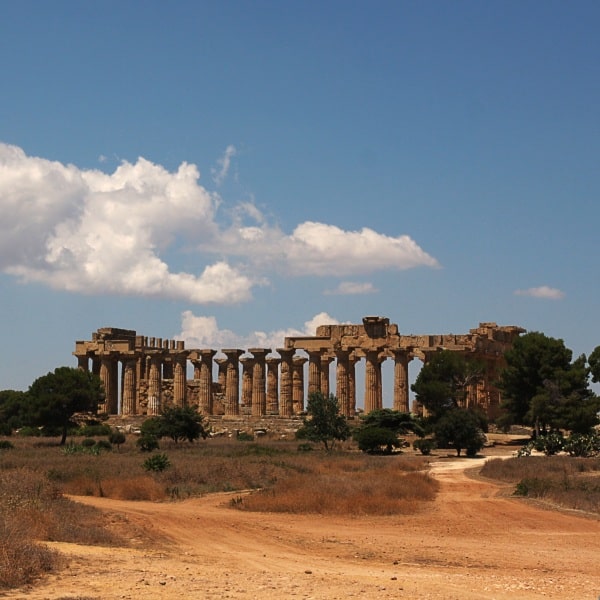
To discover Segesta is to encounter one of the most atmospheric ancient sites in the Mediterranean — a Greek temple that has stood almost entirely intact for over 2,400 years in a landscape that seems designed to make its presence feel inevitable. The temple at Segesta was built in the late 5th century BC by the Elymians, a people of uncertain origin who inhabited the northwestern corner of Sicily and maintained complex alliances with both Greek and Carthaginian powers. What makes Segesta extraordinary is not just the quality of the architecture — the Doric columns are perfectly proportioned, the honey-colored limestone glowing in the afternoon sun — but its setting: isolated on a hilltop above a deep valley, surrounded by nothing but the sound of wind and the movement of the grass below the colonnades. There is no modern town, no encroaching development, no distraction from the building itself.
The Temple and the Theatre
The Segesta archaeological site contains two main monuments: the temple in the valley and the theatre on the hill above. The temple was never completed — the columns were never fluted, the roof was never added — which has led historians to speculate that construction was interrupted by the outbreak of war with Selinunte in 415 BC and never resumed. The incomplete state of the building, paradoxically, makes it easier to understand how Greek temples were actually constructed: the column drums, the unfinished entablature, the roughness of the surfaces that would eventually have been smoothed away. The theatre sits higher up the hill, carved into the rock with views across the valley to the Gulf of Castellammare and, on clear days, to the islands of the Aeolian archipelago on the horizon. It was built in the Hellenistic period, likely in the 3rd century BC, and is still used for performances in summer, when the combination of ancient architecture and open-air setting creates an experience that modern venues cannot replicate.
Erice: A Hill Town Suspended Above the Sea
Thirty kilometers north of Segesta, the medieval hill town of Erice occupies the summit of Monte San Giuliano at 750 meters above the sea. The ascent — by road through a series of hairpin bends, or by cable car from the coast — arrives at a town of extraordinary preservation: cobbled streets, Norman fortifications, Baroque churches, and stone houses that have changed little in five centuries. The views from the walls of Erice extend across the salt pans of Trapani, the island of Favignana, and the open sea toward Tunisia on clear days. Erice is also known for its pastry tradition — almond-based sweets produced by the local convents for centuries, sold in small shops throughout the town center and worth the visit independently of anything else the town offers.
Northwestern Sicily on a Self-Drive Itinerary
Segesta and Erice sit at the heart of a corner of Sicily that most visitors skip in favor of Palermo, Taormina, and the Valley of the Temples. That is precisely what makes this part of the island worth building into a self-guided tour of Sicily. The salt pans of Trapani, the archaeological site of Mozia on its island in a lagoon, the fishing town of Marsala and its wine cellars, the remote beaches of the Zingaro nature reserve — all of it lies within reach of Segesta and Erice, connected by roads that run through a landscape of vineyards, olive groves, and low limestone hills that characterize this part of the Sicily region.
Two Sites, One Afternoon
Segesta and Erice are close enough to combine in a single day, though each deserves more time than a rushed visit allows. The logical sequence — Segesta in the morning when the light on the temple is at its best, Erice in the afternoon when the town empties of day-trippers and the views from the walls take on a different quality — makes the pairing natural rather than forced. Both sites reward those who arrive with time to sit, look, and let the landscape work at its own pace.
Italy Trails at Segesta and Erice
Italy Trails builds Segesta and Erice into Sicilian self-drive itineraries with accommodation chosen in Trapani or the surrounding countryside, routes mapped to connect the archaeological sites with the coastline and the salt pans, and the local knowledge that makes the difference between a standard day trip and a genuinely memorable one. Contact our team to start planning, or learn more about how a self-guided tour works.
To provide the best experiences, we and our partners use technologies like cookies to store and/or access device information. Consenting to these technologies will allow us and our partners to process personal data such as browsing behavior or unique IDs on this site and show (non-) personalized ads. Not consenting or withdrawing consent, may adversely affect certain features and functions.
Click below to consent to the above or make granular choices. Your choices will be applied to this site only. You can change your settings at any time, including withdrawing your consent, by using the toggles on the Cookie Policy, or by clicking on the manage consent button at the bottom of the screen.