
Venaria Reale: The Versailles of Piedmont
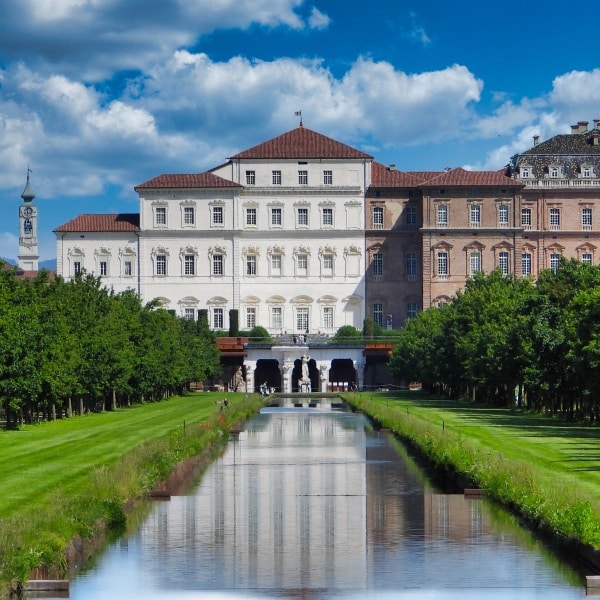
Venaria Reale is one of the great royal residences of Europe — a Savoy hunting palace on the northwestern outskirts of Turin whose scale, ambition, and restored grandeur place it among the finest examples of Baroque architecture and landscape design on the continent. Built from 1659 onward at the commission of Carlo Emanuele II of Savoy, expanded and transformed over the following century by the greatest architects working in Piedmont, and declared a UNESCO World Heritage Site in 1997 as part of the Residences of the Royal House of Savoy, Venaria Reale fell into disrepair after the unification of Italy and remained largely abandoned for over a century. Its restoration, completed in 2007 after three decades of work, is one of the most ambitious conservation projects in Italian history — and the result is a palace complex that receives over a million visitors a year and still manages to feel, in its quieter corners, like a place discovered rather than visited.
The Palace: Architecture and Interior
The palace as it stands today is largely the work of Michelangelo Garove and Filippo Juvara, the architect who transformed the Savoy residences in the early 18th century with a series of interventions that redefined Baroque architecture in northern Italy. Juvara’s Galleria di Diana — the great ceremonial hall that runs the length of the palace’s central wing — is among the finest interiors of its period anywhere in Europe: a sequence of arched bays lit by tall windows on both sides, the ceiling frescoed with hunting scenes that reference the palace’s original function as a royal hunting lodge. The Cappella di Sant’Uberto, the palace chapel designed by Juvara and completed in 1729, is considered his masterpiece in Venaria: a centralized space of extraordinary luminosity whose dome and lantern flood the interior with natural light in a way that anticipates the spatial experiments of a later generation. The restored state apartments, the ceremonial staircases, and the sequence of antechambers and reception rooms together form one of the most coherent examples of Savoy court culture anywhere in the region.
The Gardens of Venaria Reale
The gardens that extend behind the palace are among the largest royal gardens in Italy — a formal landscape of parterres, fountains, tree-lined allées, and a long central axis that stretches toward the hunting grounds beyond the boundary walls. The lower gardens, closest to the palace, are organized in the French formal style with geometric planting beds and restored hydraulic features that were among the most technically ambitious in 17th-century Italy. The upper gardens, less formal and more varied in character, include the Peschiera — a large ornamental lake — and the Borgo Castello, a secondary residence within the garden perimeter whose tower and fortified walls give the landscape a picturesque counterpoint to the palace’s Baroque formality. Walking the full length of the gardens in either direction takes the better part of an hour and reveals a sequence of views and spaces that no single photograph can adequately summarize.
Venaria Reale and the Savoy Residences
Venaria Reale is the largest and most visited of the Residences of the Royal House of Savoy, but it belongs to a network of palaces, hunting lodges, and fortified residences that the Savoy dynasty built and maintained across Piedmont over three centuries. The Palazzo Reale in Turin, the Castello di Rivoli, the Palazzina di Caccia di Stupinigi, and the Castello di Agliè are all part of the same UNESCO designation, and a self-drive itinerary that connects them forms one of the most coherent royal architecture routes in Europe. Each residence reflects a different moment in Savoy history and a different architectural sensibility, but all share the ambition and the resources of a dynasty that used its buildings as statements of political power as much as places of habitation.
Venaria Reale on a Piedmont Self-Drive
Venaria Reale sits twelve kilometers from the center of Turin and connects naturally into a self-guided tour of Piedmont that can combine the palace with the Egyptian Museum and the city of Turin before heading south into the Langhe and Monferrato wine territories. Explore the full Piedmont region to see how the palace fits into a broader Piedmontese itinerary that moves between royal architecture, wine country, and alpine landscape.
Italy Trails at Venaria Reale
Italy Trails builds Venaria Reale into Piedmontese self-drive itineraries with palace visits planned into the route, accommodation selected in Turin or in the surrounding area, and connections mapped to the other Savoy residences and to the wine country to the south. Contact our team to start planning, or learn more about how a self-guided tour works.
To provide the best experiences, we and our partners use technologies like cookies to store and/or access device information. Consenting to these technologies will allow us and our partners to process personal data such as browsing behavior or unique IDs on this site and show (non-) personalized ads. Not consenting or withdrawing consent, may adversely affect certain features and functions.
Click below to consent to the above or make granular choices. Your choices will be applied to this site only. You can change your settings at any time, including withdrawing your consent, by using the toggles on the Cookie Policy, or by clicking on the manage consent button at the bottom of the screen.