
The World’s Oldest Egyptian Museum: Turin’s Extraordinary Collection
The world’s oldest Egyptian museum is not in Cairo, not in London, not in Paris — it is in Turin, in a 16th-century palazzo in the center of a northern Italian city that has been home to this collection since 1824. The Museo Egizio di Torino holds the second-largest collection of ancient Egyptian artifacts anywhere on earth, after the Egyptian Museum in Cairo itself, and its origins predate every other dedicated institution of its kind. What sets Turin’s museum apart is not just the scale of the collection — over 40,000 objects spanning four millennia of Egyptian civilization — but the depth and coherence of what it contains: complete tomb assemblages, intact royal statues, papyri, everyday objects, and the only complete Egyptian tomb reassembled outside Egypt. A journey through this museum is a journey through one of the most significant encounters between European scholarship and ancient civilization in the history of archaeology.
The Origins of the Collection
The Museo Egizio’s collection was assembled largely through two major acquisitions in the early 19th century. The first came in 1824, when King Carlo Felice of Savoy purchased the collection of Bernardino Drovetti — French consul general in Egypt during the Napoleonic period and one of the most prolific collectors of Egyptian antiquities in history. Drovetti’s collection included royal statues, sarcophagi, papyri, and objects from Thebes, Karnak, and the Valley of the Kings that he had acquired during two decades of activity in Egypt. The second major acquisition, earlier but equally significant, was the collection assembled by the explorer Giovanni Battista Belzoni and purchased by the museum in the same period. Together these two collections formed the foundation of what is now the world’s oldest Egyptian museum, and subsequent excavations — particularly at the site of Deir el-Medina, the village of the craftsmen who built the royal tombs — added thousands more objects over the following century.
The Highlights of the Collection
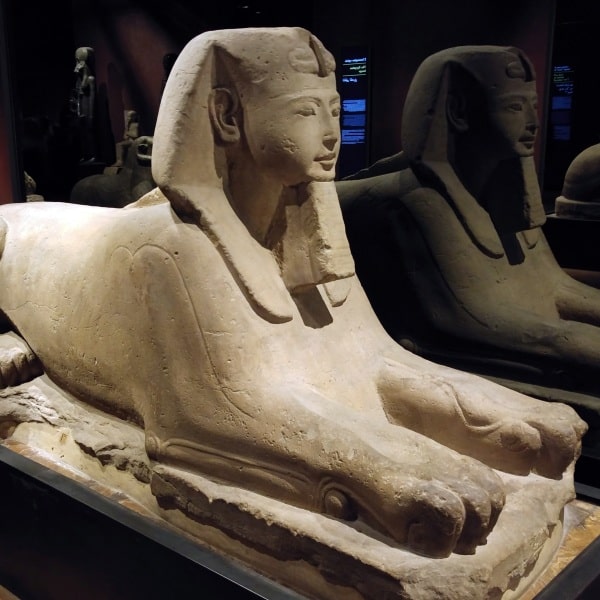
The museum’s permanent collection is organized chronologically and thematically across multiple floors of the palazzo. The ground floor is dominated by monumental sculpture — colossal statues of pharaohs and deities in granite and sandstone, including the celebrated seated statue of Ramesses II that has become the symbol of the museum. The upper floors hold the papyri collection, one of the finest in the world, including the Turin King List — a document of extraordinary historical importance that records the names and reigns of Egyptian pharaohs from the earliest dynasties — and the Erotic Papyrus, the most complete surviving example of ancient Egyptian erotic art. The reconstructed tomb of Kha and Merit, a royal architect and his wife who lived during the reign of Amenhotep II, is the museum’s most complete and moving installation: an entire tomb assemblage — furniture, food, clothing, cosmetics, tools — discovered intact in 1906 and reassembled exactly as it was found, offering an unmediated view of domestic and funerary life in 14th-century BC Egypt.
Turin Beyond the Museum
The Museo Egizio sits in the center of a city that deserves more than a single afternoon. Turin was the first capital of unified Italy, and its Savoy heritage is visible in the baroque palaces, royal residences, and monumental piazzas that define the city center. The Palazzo Reale, the Palazzo Madama, and the Reggia di Venaria — a vast royal hunting palace on the outskirts of the city — form a UNESCO World Heritage Site of Savoy residences that rivals Versailles in ambition if not in fame. Turin is also the home of the Shroud of Turin, preserved in the cathedral of San Giovanni Battista, and of one of the finest collections of Baroque art in Italy, housed in the Galleria Sabauda adjacent to the Museo Egizio. The city’s café culture — among the oldest in Italy, with historic establishments that have operated since the 18th century — and its reputation as the birthplace of the Italian automotive industry add further dimensions to what is, for many visitors, an unexpected discovery.
Turin and the World’s Oldest Egyptian Museum on a Piedmont Self-Drive
Turin is the natural gateway to a self-guided tour of Piedmont — a starting point from which the Langhe and Monferrato wine territories lie an hour to the south, the Alps are visible to the west, and the lakes of northern Piedmont are within easy reach. Explore the full Piedmont region to see how Turin connects with the broader landscape of one of Italy’s most rewarding and undervisited regions.
Italy Trails in Turin
Italy Trails builds Turin into Piedmontese self-drive itineraries with accommodation selected in the city center, museum visits planned into the itinerary, and routes that connect the city with the wine country and alpine landscapes that surround it. Contact our team to start planning, or learn more about how a self-guided tour works.
To provide the best experiences, we and our partners use technologies like cookies to store and/or access device information. Consenting to these technologies will allow us and our partners to process personal data such as browsing behavior or unique IDs on this site and show (non-) personalized ads. Not consenting or withdrawing consent, may adversely affect certain features and functions.
Click below to consent to the above or make granular choices. Your choices will be applied to this site only. You can change your settings at any time, including withdrawing your consent, by using the toggles on the Cookie Policy, or by clicking on the manage consent button at the bottom of the screen.