
Val d’Orcia Cypress Lanes: The Roads That Made Tuscany Famous
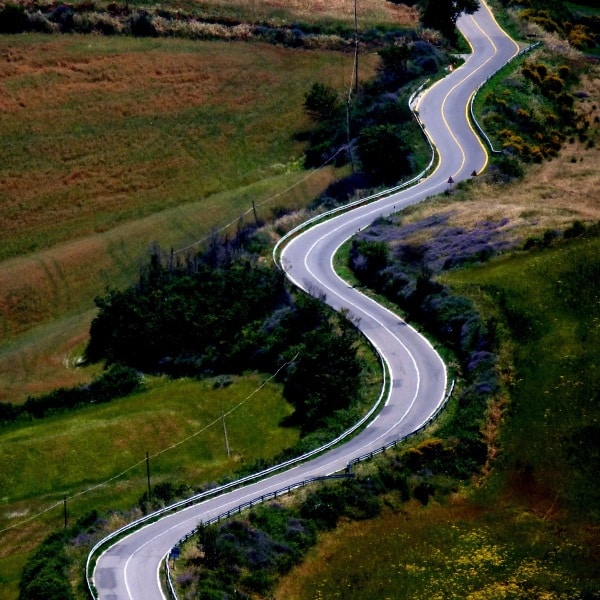
The Val d’Orcia cypress lanes are among the most photographed landscapes in the world — white gravel roads cutting through open hills, lined on both sides by trees that stand like sentinels against the sky, in a UNESCO World Heritage countryside shaped over centuries by human hands working with the land. This is the Tuscany of the imagination made real: soft clay hills that change color with the season, isolated farmhouses on ridgelines, and a quality of afternoon light that photographers spend careers trying to capture accurately. Driving these roads by self-drive is the experience that brings it all into focus — slowly, at your own pace, stopping when the view demands it.
Val d’Orcia: A Landscape Composed Over Centuries
The Val d’Orcia extends south of Siena through a succession of hill towns and open agricultural valleys — Pienza, Montalcino, Bagno Vignoni, San Quirico d’Orcia, Castiglione d’Orcia — each one distinct in character but connected by the same rolling landscape of clay hills, cypress rows, and wheat fields that turn gold in early summer. Pienza was redesigned in the 15th century by Pope Pius II as an ideal Renaissance city, and its central piazza remains one of the most harmonious urban spaces in Italy, framed by the cathedral and the Palazzo Piccolomini with the valley visible beyond. Montalcino sits on a commanding ridge above the Val d’Orcia and gives its name to Brunello, one of Italy’s most celebrated red wines — a reason in itself to slow the car and stop for an hour. Bagno Vignoni is unlike any other town in Tuscany: its central piazza is occupied not by a church or a fountain but by a large thermal pool, fed by volcanic springs that have made this area a destination since Roman times.
The Crete Senesi: Clay Hills and Cypress Rows
North of the Val d’Orcia, between Siena and Asciano, the Crete Senesi offer a different version of the same landscape: bare clay hills sculpted by erosion into rounded forms known as biancane, dotted with isolated farmhouses and bisected by the cypress-lined roads that have become the visual shorthand for Tuscany itself. The Strada Provinciale delle Crete Senesi is one of the finest driving roads in the region — unhurried, largely traffic-free, and passing through countryside that has changed little since the Renaissance painters who grew up here used it as a backdrop. The Val d’Orcia cypress lanes continue south, but the Crete Senesi reward those who take the detour north before heading deeper into the valley.
Val di Chiana: The Other Valley
East of Siena and north of the Val d’Orcia, the Val di Chiana occupies a wide basin between the Apennines and the Tuscan hills — historically a marshy plain drained and reclaimed over centuries into productive agricultural land. The towns that ring the valley — Montepulciano, Cortona, Chiusi, Sarteano — sit elevated above the plain on hilltops and ridges, each one with views across the valley floor and beyond. Montepulciano is the most visited, its steep main street climbing through Renaissance palaces and wine shops selling Vino Nobile, another of Tuscany’s great DOCGs. Cortona rewards visitors who arrive early or late in the day, when the town returns to its natural pace and the views from the walls over the Val di Chiana take on a different quality in the changing light.
Two Valleys, One Self-Drive Itinerary
The Val d’Orcia cypress lanes and the Val di Chiana connect naturally into a single self-drive loop that can be extended or contracted depending on how much time you have. This is exactly the kind of route that suits a self-guided tour of Tuscany — unhurried, flexible, and shaped around what you find along the way. The wider Tuscany region connects these valleys north to Florence and west to Siena and San Gimignano, making it easy to build a complete Tuscan itinerary around the cypress lanes at its heart.
Italy Trails in Val d’Orcia and Val di Chiana
Italy Trails designs self-drive itineraries through both valleys with accommodation selected for position and character — farmhouses in the clay hills, small hotels inside medieval walls, estates within walking distance of wine cellars. The routes are mapped to keep you on the right roads at the right time of day. Contact our team to start planning, or find out more about how a self-guided tour works.
To provide the best experiences, we and our partners use technologies like cookies to store and/or access device information. Consenting to these technologies will allow us and our partners to process personal data such as browsing behavior or unique IDs on this site and show (non-) personalized ads. Not consenting or withdrawing consent, may adversely affect certain features and functions.
Click below to consent to the above or make granular choices. Your choices will be applied to this site only. You can change your settings at any time, including withdrawing your consent, by using the toggles on the Cookie Policy, or by clicking on the manage consent button at the bottom of the screen.