
Ligurian Pesto Class: Learning the Original at the Source
A Ligurian pesto class is one of the most direct and satisfying culinary experiences available in Italy — a hands-on introduction to a sauce that the rest of the world has imitated extensively and understood only partially. Pesto alla Genovese is not a generic herb sauce. It is a specific preparation with a DOP designation, seven regulated ingredients, and a technique — the marble mortar and the wooden pestle — that produces a result categorically different from anything made in a food processor. The basil used in authentic Ligurian pesto is grown in the greenhouses of Pra’, a district west of Genoa where the combination of soil, microclimate, and traditional cultivation produces leaves of extraordinary delicacy and fragrance — smaller, more tender, and less pungent than the basil grown elsewhere. Learning to make pesto in Liguria, with these ingredients and this technique, is to understand why the sauce became famous in the first place.
The Seven Ingredients and Why Each Matters
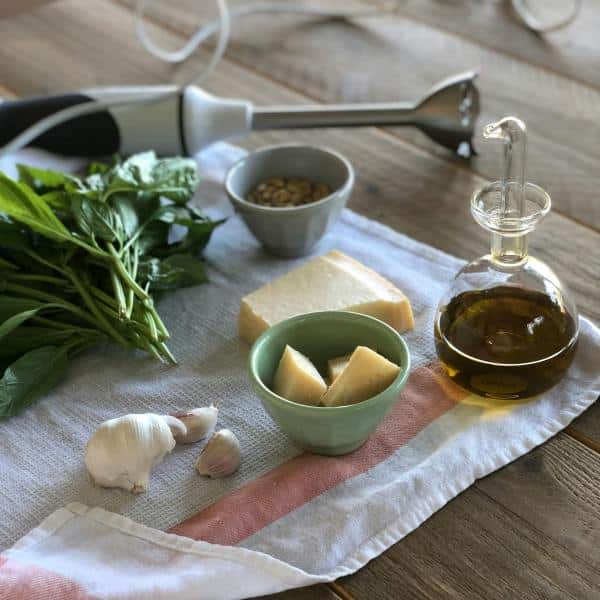
The DOP specification for Pesto alla Genovese lists seven ingredients, and the quality and provenance of each contributes to the final result in ways that shortcuts cannot replicate. Genovese basil DOP — the aromatic foundation, whose leaves must be harvested young and handled gently to avoid bruising and oxidation. Ligurian extra virgin olive oil — mild, delicate, and fruity rather than peppery, chosen specifically because a more assertive oil would overwhelm the basil rather than carry it. Parmigiano Reggiano and Pecorino Sardo — two cheeses used in combination, the first for depth and umami, the second for a sharper, saltier note that lifts the sauce. Pine nuts — the Italian variety, smaller and more buttery than the Chinese pine nuts that have largely replaced them in commercial production. Coarse sea salt — used in the mortar to help break down the basil leaves without generating heat. And garlic — used sparingly, just enough to give the sauce a backbone without dominating it. A pesto class in Liguria teaches you not just the technique but the reasoning behind each ingredient choice.
The Mortar Technique
The mortar and pestle method for making pesto is not simply a traditionalist preference — it produces a genuinely different result from mechanical processing. The circular grinding motion of the pestle against the marble crushes the basil cells rather than cutting them, releasing the aromatic oils in a way that preserves their freshness and prevents the oxidation that turns machine-made pesto grey and bitter within minutes. The process is meditative and satisfying in equal measure: the basil is added first with the garlic and salt, ground to a paste, then the pine nuts, then the cheese, and finally the olive oil — incorporated gradually until the sauce reaches the consistency and color that mark it as finished. A skilled teacher in a Ligurian pesto class will show you the difference between under-worked and over-worked pesto, and the point at which the sauce is exactly right.
Pesto Beyond the Jar: Ligurian Food Culture
Understanding pesto means understanding the food culture that produced it. Ligurian cooking is the product of a region that is simultaneously mountainous and maritime — a narrow strip of coast backed by steep Apennine hillsides where agriculture was always difficult and the sea provided what the land could not. The cuisine is consequently frugal, inventive, and intensely flavored: focaccia baked in olive oil, farinata made from chickpea flour, trofie pasta dressed with pesto and green beans and potato, stuffed vegetables, fish soups, and a tradition of using wild herbs — marjoram, thyme, borage — that reflects centuries of foraging from the hillsides above the coast. A pesto class that includes a tasting of the sauce with freshly made trofie or trenette, prepared in the traditional way with green beans and potato cooked in the same water, completes the picture of a food culture that is coherent from ingredient to table.
Pesto Class as Part of a Liguria Self-Drive
A Ligurian pesto class fits naturally into a self-drive itinerary that moves along the coast between Genoa and the eastern Riviera — combining the cooking experience with a visit to Camogli and San Fruttuoso, an afternoon in Portofino, or a drive along the Cinque Terre coast to the west. The Liguria region is compact enough to explore in its entirety over a few days, and a self-guided tour that combines coastal scenery, historic villages, and a pesto class covers the full range of what the region offers without rushing any of it.
Italy Trails and the Ligurian Pesto Class
Italy Trails includes authentic Ligurian pesto classes in self-drive itineraries along the Riviera — with classes arranged with local teachers in Genoa or along the eastern coast, accommodation selected in the area, and routes that connect the cooking experience with the landscape and the other activities that make Liguria worth the detour. Contact our team to start planning, or learn more about how a self-guided tour works.
To provide the best experiences, we and our partners use technologies like cookies to store and/or access device information. Consenting to these technologies will allow us and our partners to process personal data such as browsing behavior or unique IDs on this site and show (non-) personalized ads. Not consenting or withdrawing consent, may adversely affect certain features and functions.
Click below to consent to the above or make granular choices. Your choices will be applied to this site only. You can change your settings at any time, including withdrawing your consent, by using the toggles on the Cookie Policy, or by clicking on the manage consent button at the bottom of the screen.