
Liguria is Italy compressed into a single arc of coastline. A thin crescent of land between the Apennines and the Ligurian Sea, barely thirty kilometres wide at its broadest, it packs more beauty, more flavour, and more drama into its territory than regions ten times its size. The roads cling to the cliff faces above the sea. The villages cling to the hillsides above the roads. And the sea — deep blue, impossibly clear — stretches to the horizon below all of it.
This is a region shaped by its geography. With almost no flat land and no room to expand inland, Liguria has always looked to the sea. Genoa built one of the great maritime republics of the Mediterranean from these narrow streets and this difficult harbour. The fishing villages of the Cinque Terre survived for centuries because the cliffs made them unreachable. And the coastline, which has attracted writers, painters, and aristocrats since the nineteenth century, remains — despite the crowds in July and August — one of the most spectacular in the world.
Five villages on a stretch of coastline that the world has made famous. Monterosso, Vernazza, Corniglia, Manarola, Riomaggiore — each one different, each one extraordinary. Coloured houses stacked on the cliff face. Terraced vineyards held together by dry-stone walls. The sea, which is every shade of blue between turquoise and midnight depending on the time of day and the angle of the light. The Cinque Terre are best experienced early in the morning or in the evening, when the day-trippers have gone and the villages return to themselves. Italy Trails knows exactly how to time this.
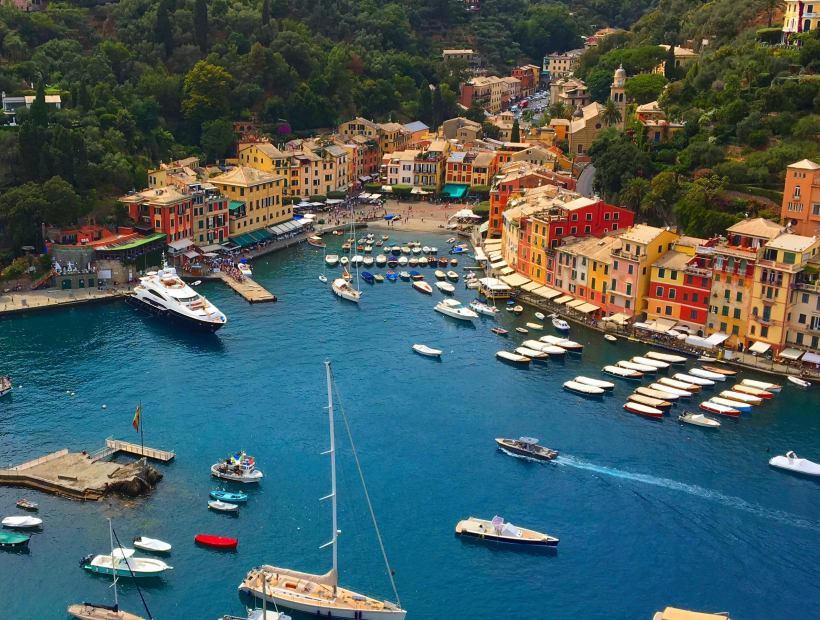
East of Genoa, the coastline of the Riviera di Levante is at its most dramatic. Portofino — a tiny harbour surrounded by pastel-coloured villas and a headland of pine forest — has been one of the most glamorous destinations in Italy since the 1950s. The Portofino peninsula, designated a marine protected area, offers some of the finest coastal walks and diving in the Mediterranean. Nearby, the fishing villages of Camogli and Santa Margherita Ligure have a charm and an authenticity that the most famous names sometimes lack.
Genoa is the great underrated city of northern Italy. Its medieval centre — a UNESCO World Heritage site — is a labyrinth of caruggi (narrow alleys) that opens without warning into piazzas of unexpected grandeur. The Palazzi dei Rolli, the Renaissance and Baroque palaces that once housed visiting kings and emperors, are among the finest in Italy. The port, rebuilt by Renzo Piano for the 1992 Colombus anniversary, is now a vibrant cultural quarter. And the food — pesto alla Genovese, focaccia, farinata, fresh fish — is reason enough to come.
West of Genoa, the Riviera di Ponente stretches toward the French border. Less famous than the Levante, it has a gentler character: longer beaches, more room, and towns like Albenga and Alassio that have the feel of the real Italian seaside rather than an international resort. The hinterland here is extraordinary — olive groves, medieval villages, and the Ligurian Alps rising steeply from the coast — and largely unknown to foreign visitors. Dolceacqua, a village with a medieval castle and a Monet connection, is one of the most beautiful in the region.
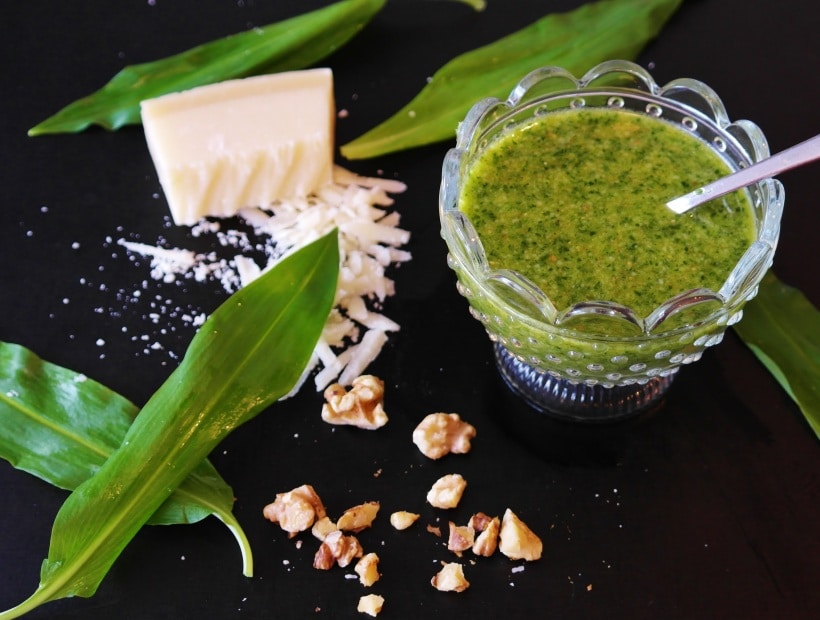
Ligurian cuisine is one of the great original cuisines of Italy, built on olive oil, herbs, and the sea. Pesto alla Genovese — basil, pine nuts, Parmigiano, Pecorino, garlic, and Ligurian olive oil, ground together in a marble mortar — is one of the iconic sauces of the world, and eating it here, with the basil grown on the hillsides above Genoa, is to understand why. Focaccia, in its Ligurian form, is something entirely different from what the word means elsewhere: thin, olive-oil-soaked, with a crust that shatters and a crumb that yields. Farinata — a chickpea flatbread baked in a wood-fired oven — is the street food of the region. And the seafood, from the anchovies of Monterosso to the fresh fish of the Riviera ports, is exceptional.
Late spring (May–June) is ideal. The Cinque Terre and the Riviera are beautiful and not yet overwhelmed by summer visitors. The hiking trails are at their best and the sea is warm enough to swim.
September and October bring the end of the tourist season and a Liguria that belongs more to itself. The light is extraordinary, the restaurants are relaxed, and the olive harvest begins in October.
Summer (July–August) is the Riviera at its most vibrant, but the most popular spots can be very crowded. The early mornings and the evenings are when Liguria is at its best.
Winter is mild on the coast and quiet everywhere. The Cinque Terre villages are almost deserted, the hiking is excellent, and the towns of the Riviera di Ponente are deeply atmospheric.
Liguria is a compact region, but navigating it well requires knowledge. The coastal road can be slow in summer; the mountain roads above it are spectacular but need experience; the parking in the Cinque Terre villages is almost nonexistent. A self-drive tour with Italy Trails takes care of all of this, planning routes that make the most of the coastline while avoiding the bottlenecks, and selecting accommodation — from boutique hotels in the Cinque Terre to villas on the Portofino peninsula — that puts you in exactly the right place at the right time.
Italy Trails designs personalised self-drive tours through Liguria that combine the Cinque Terre, Portofino, Genoa, and the Riviera di Ponente. The region connects naturally with Tuscany to the south and the North of Italy to the north for a wider itinerary.