
Appian Way E-Bike: The Best Way to Travel Rome’s Ancient Road
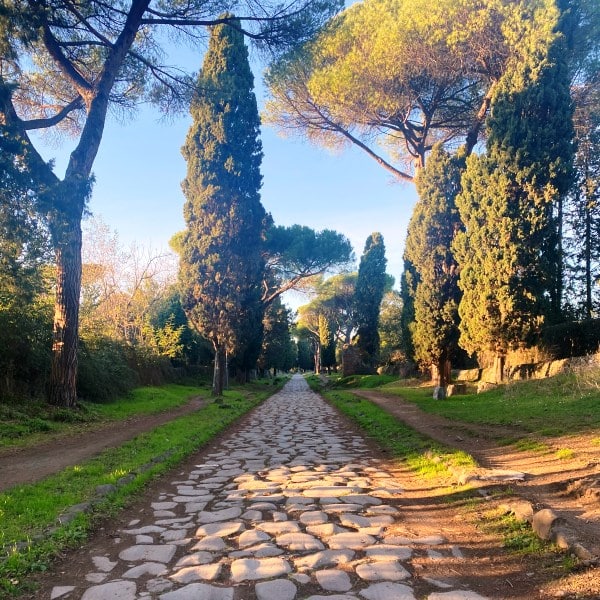
The Appian Way e-bike experience is one of the most unusual and rewarding ways to spend a day in Rome — a route along one of the oldest and most historically significant roads in the ancient world, followed on electric bicycle through a landscape of basalt paving stones, ruined tombs, catacombs, and aqueduct arches that extends south from the city walls into the Roman Campagna. The Via Appia Antica was begun in 312 BC by the censor Appius Claudius Caecus — who gave it his name — and extended over the following centuries to reach Brindisi on the Adriatic coast, a distance of 560 kilometers that made it the longest road in the Roman world and the primary artery connecting Rome to the south of Italy and to Greece beyond. The section closest to Rome, now protected within the Parco Regionale dell’Appia Antica, preserves the most complete stretch of ancient road surface anywhere in the world, its original basalt blocks still in place after two thousand years of use.
The Road and the Tombs
The Appian Way was, from its earliest days, lined with the tombs of Rome’s most prominent families — burial inside the city walls was forbidden by Roman law, and the great consular roads leading out of Rome became, over time, monumental cemeteries of extraordinary ambition. The tombs that line the Via Appia Antica range from modest funerary monuments to vast mausolea whose ruins still dominate the landscape of the park: the Tomb of Cecilia Metella, a massive circular drum of travertine built in the late 1st century BC for the daughter-in-law of the triumvir Crassus, is the best-preserved and most imposing, its castellated crown added in the medieval period when it was incorporated into a fortified complex. The Villa dei Quintili, the largest private villa in the Roman suburbs, was expropriated by the Emperor Commodus in the 2nd century AD and its ruins — baths, aqueduct, hippodromes — extend across a wide area of the park visible from the road.
The Catacombs
Beneath the road and its surroundings, a network of underground burial corridors was excavated by the early Christian community between the 2nd and 5th centuries AD — the catacombs that have drawn pilgrims and visitors to the Appian Way for fifteen hundred years. The Catacombe di San Callisto, the Catacombe di San Sebastiano, and the Catacombe di Domitilla are the three most significant and most visited, their corridors extending for kilometers beneath the surface and containing tens of thousands of loculi — the rectangular niches cut into the tufa walls to receive the bodies of the dead. The frescoes, inscriptions, and early Christian symbols that decorate the more elaborate chambers offer the most direct surviving evidence of the visual culture of the early Church, in a setting of considerable emotional power that no museum reproduction can replicate.
The Aqueducts and the Campagna
East of the Appian Way, the Parco degli Acquedotti preserves the most spectacular section of the Roman aqueduct system — the arches of the Aqua Claudia and the Anio Novus marching across the open campagna in a double tier of brick and tufa that extends for several kilometers across the flat landscape. An e-bike route that combines the Appian Way with a detour through the aqueduct park covers the full range of what the Roman suburban landscape offers: ancient road, underground burial, and monumental hydraulic engineering, in a single morning of cycling through open countryside a few kilometers from the city center.
The Appian Way on a Lazio Self-Drive
The Appian Way e-bike excursion connects naturally into a Rome itinerary that includes the Colosseum and Roman Forum and a day trip to Tivoli, and fits into a broader self-guided tour of Lazio that extends beyond the city into the surrounding region. Explore the full Lazio region to see how the Appian Way connects with the rest of the itinerary, then contact our team to start planning, or learn more about how a self-guided tour works.
To provide the best experiences, we and our partners use technologies like cookies to store and/or access device information. Consenting to these technologies will allow us and our partners to process personal data such as browsing behavior or unique IDs on this site and show (non-) personalized ads. Not consenting or withdrawing consent, may adversely affect certain features and functions.
Click below to consent to the above or make granular choices. Your choices will be applied to this site only. You can change your settings at any time, including withdrawing your consent, by using the toggles on the Cookie Policy, or by clicking on the manage consent button at the bottom of the screen.