
Grotta Gigante Giant Cave: The Largest Tourist Cave in the World
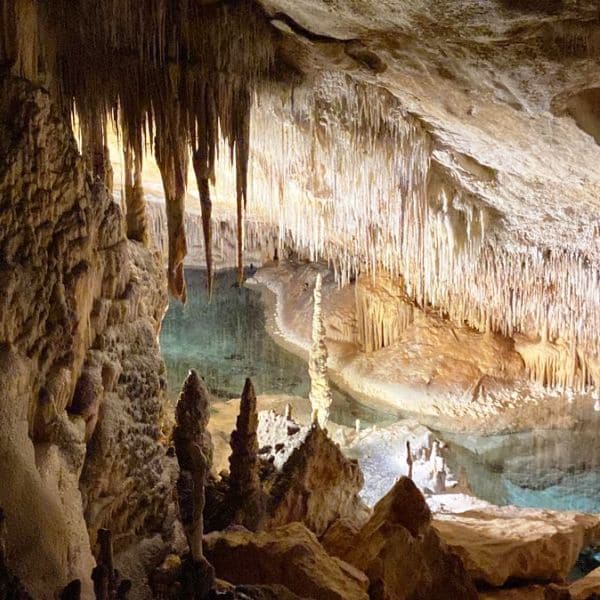
The Grotta Gigante giant cave is one of the most extraordinary natural sites in Italy and one of the most remarkable geological attractions in the whole of Europe — a single underground chamber of such dimensions that it holds the Guinness World Record as the largest cave open to tourists in the world. Located on the Carso plateau above Trieste, just fifteen kilometers from the city center, the cave was discovered in 1840 and opened to visitors in 1908, and has been drawing travelers and scientists ever since with a combination of geological spectacle and scientific significance that few underground sites anywhere can match. The main chamber measures 107 meters in height, 167 meters in length, and 65 meters in width — large enough to contain the entire basilica of Saint Peter in Rome within its walls, as guides are fond of pointing out.
The Cave: Scale, Stalactites, and Science
The descent into the Grotta Gigante follows a staircase of over 500 steps that leads from the Carso surface into the main chamber below, where the temperature remains a constant 11 degrees Celsius regardless of the season above. The chamber is lit to reveal the full scale of the space — the ceiling lost in shadow above, the floor stretching away toward the far wall, the stalactites and stalagmites that have been forming over hundreds of thousands of years rising and descending at intervals across the chamber. The two largest stalactites, known as the Giant and the Broken Giant, reach heights of several meters and represent centuries of mineral deposition from the limestone above. The cave also houses two pendulums installed by the University of Trieste to measure the Earth’s tidal deformation — a reminder that the Grotta Gigante is not only a tourist attraction but an active scientific monitoring station of international significance.
The Carso Plateau and the Landscape Above
The cave sits within the broader landscape of the Carso — the limestone plateau that rises steeply from the coast of Trieste toward the Slovenian border, a terrain of sinkholes, disappearing streams, and underground cave systems carved over millions of years by water dissolving the soluble rock below. The word “karst” — used internationally to describe this type of landscape — derives directly from the Slovenian name for this plateau, Kras, reflecting the fact that geologists first described and studied this terrain here before recognizing it elsewhere in the world. The surface landscape of the Carso is characteristically bare and wind-exposed, punctuated by the foibe — the deep sinkholes that open without warning in the plateau surface — and crossed by dry stone walls that enclose fields of thin, rocky soil where the local Terrano wine grape is cultivated under conditions that would defeat any other agricultural ambition.
Combining Grotta Gigante with Trieste
The Grotta Gigante is most naturally combined with a visit to Trieste — a fifteen-minute drive from the city along the road that climbs from the coast to the plateau. A morning in the cave followed by an afternoon in the city, with a coffee at one of Trieste’s historic cafés and a walk along the Riva waterfront at dusk, covers the full contrast between the underground world of the Carso and the Habsburg elegance of the port city below. The combination fits naturally into a self-guided tour of Friuli Venezia Giulia that can extend north toward Aquileia and the Friuli plain. Explore the full Friuli Venezia Giulia region to see how the cave fits into a complete regional itinerary, then contact our team to start planning, or learn more about how a self-guided tour works.
To provide the best experiences, we and our partners use technologies like cookies to store and/or access device information. Consenting to these technologies will allow us and our partners to process personal data such as browsing behavior or unique IDs on this site and show (non-) personalized ads. Not consenting or withdrawing consent, may adversely affect certain features and functions.
Click below to consent to the above or make granular choices. Your choices will be applied to this site only. You can change your settings at any time, including withdrawing your consent, by using the toggles on the Cookie Policy, or by clicking on the manage consent button at the bottom of the screen.