
Drive inland from any beach in Sardinia and within twenty minutes you are in another world. The coastal hotels and parasols disappear. The road narrows, begins to climb, passes through cork oak forest. A village appears on a hilltop — stone houses, a Romanesque church, a bar where old men play cards in the shade. The sea is still visible, far below, a sliver of impossible blue between the mountains. And you realise that the Sardinia most visitors see — the resort coast, the yacht harbours, the organised beach clubs — is barely a fraction of the island that exists just a few kilometres away.
Sardinia is the second-largest island in the Mediterranean, and it contains within its 24,000 square kilometres a variety of landscapes, cultures, and histories that would take several lifetimes to fully understand. It is older than Rome — the nuraghi, the Bronze Age stone towers that dot the island in their thousands, were built here between 1800 and 500 BC, by a civilisation that left no written records and whose purpose remains a mystery. It is wilder than anywhere on the Italian mainland — the Gennargentu massif in the centre reaches 1,800 metres and shelters villages where the dialect is closer to Latin than to any modern language. And it is more beautiful, in certain lights and in certain places, than anywhere else on earth.
The eastern coast of Sardinia, from the Gulf of Orosei to the Ogliastra, is where the island shows its most dramatic face. Cala Goloritè — a cove reachable only by boat or by a two-hour hike down a mountain path — is consistently voted one of the most beautiful beaches in the world. The cliffs of the Golfo di Orosei rise vertically from the sea for hundreds of metres, concealing coves and caves that glow turquoise in the midday light. Inland from here, the Barbagia — the mountain heartland of the island — is the most traditional and least-visited part of Sardinia: ancient villages, festivals in traditional costume that have continued unchanged for centuries, and food that belongs entirely to the shepherd culture that shaped the interior.
The north of Sardinia contains two worlds that exist within sight of each other. The Costa Smeralda, developed by the Aga Khan in the 1960s, is one of the most exclusive resorts in the Mediterranean — turquoise water, white sand, and a yacht culture that brings the world’s wealthy every summer. Twenty minutes inland, the granite landscape of the Gallura is completely different: a wild, unpopulated territory of enormous smooth boulders, cork oak forests, and vineyards producing Vermentino — one of Sardinia’s finest white wines. Castelsardo, a medieval village on a promontory above the sea, is one of the most beautiful in the island. And Palau, the gateway to the Maddalena Archipelago — a national park of islands and transparent water — is a small port with enormous appeal.
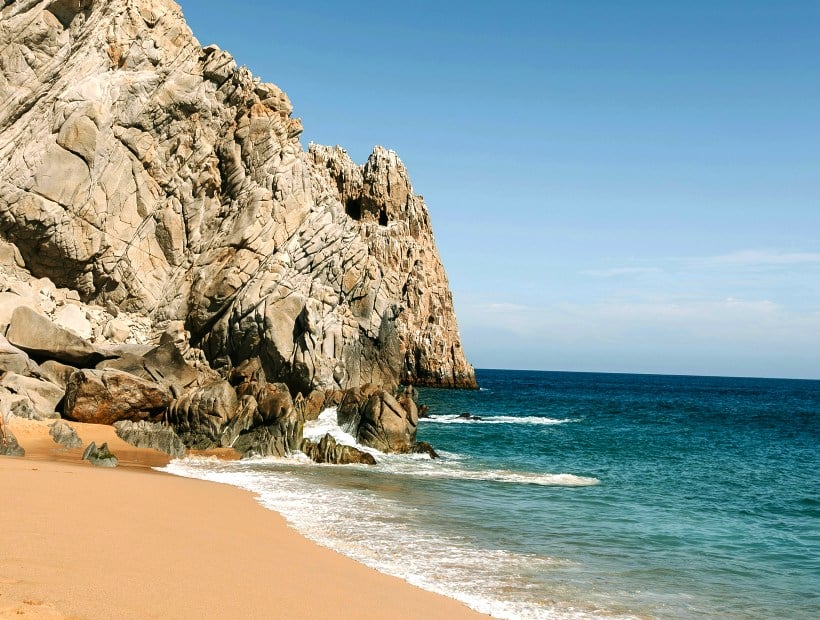
Western Sardinia is the least visited and, for the curious traveller, often the most rewarding. The Sinis peninsula holds the Phoenician and Roman city of Tharros — columns and mosaics standing above a sea that was already old when Rome was young. Nearby, the beach of Is Arutas is made of quartz grains so perfectly rounded that the sand feels like rice between your fingers. The Oristano plain, one of the few flat areas of the island, produces Vernaccia — Sardinia’s most distinctive wine, amber and powerful. And the Costa Verde, a stretch of wild coastline backed by dunes and mountains, offers a solitude that is increasingly rare in the Mediterranean.
Cagliari, the island’s capital, is a city of layered history and genuine character — a Phoenician harbour, a Roman amphitheatre, a Pisan citadel, and a Baroque cathedral, all stacked on a hill above one of the finest natural harbours in the Mediterranean. The surrounding area holds the nuraghe of Su Nuraxi at Barumini — the best-preserved Bronze Age complex in the island and a UNESCO World Heritage site — and the Phoenician necropolis of Sulcis, where an entire ancient burial ground has been carved into the rock above the sea.
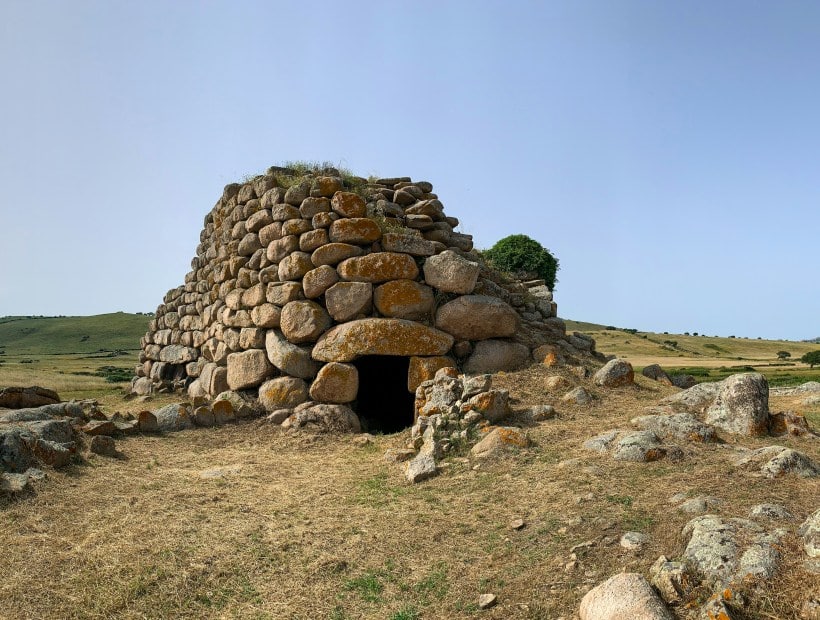
The Sardinia that stays with you is not the one you find by staying at a beach resort. It is the village at the end of a road that seemed to go nowhere. The nuraghe standing alone in a field of asphodels. The bar in Orgosolo where someone offers you a glass of Cannonau and tells you about the murals on the walls. The cove that appears below a bend in the coastal road, with no name, no access sign, and no one on it but you.
None of this is reachable without a car. Sardinia’s public transport connects the main towns, but the island’s greatest experiences are scattered across a landscape that demands freedom of movement. A self-drive tour is not just the practical choice — it is the choice that opens Sardinia up. Italy Trails designs itineraries that balance the coast with the interior, the famous with the unknown, the comfortable with the genuinely surprising.
Sardinian cuisine is pastoral and ancient. Porceddu — suckling pig roasted on the spit over myrtle wood — is the island’s great celebratory dish. Culurgiones are stuffed pasta parcels from the Ogliastra, filled with potato, pecorino, and mint, sealed with a distinctive braid. Bottarga — dried mullet roe, intensely savoury, shaved over pasta or eaten in thin slices on bread — is the gold of the Sardinian kitchen. And the bread: pane carasau, the paper-thin flatbread that shepherds carried for weeks in the mountains, is the most characterful bread in Italy.
The wines deserve equal attention. Cannonau — a red made from Grenache grown at altitude in the Barbagia and Ogliastra — is one of the most distinctive reds in Italy, and the people who drink it regularly are, statistically, among the longest-lived on earth. Vermentino di Gallura is a white of real complexity. Vernaccia di Oristano is the wine that surprises everyone who discovers it: oxidative, amber, unlike anything else from Italy.
May and June are the finest months. The island is green from the spring rains, the sea is already warm enough to swim, and the beaches are almost empty. The nuraghi are at their most atmospheric in the morning light.
September and October bring the end of the tourist season and a Sardinia that belongs to itself again. The grapes are being harvested in the Gallura and the Cannonau vineyards, and the food is extraordinary.
Summer is peak season on the coast — beautiful but busy. The interior remains cool and quiet even in August, and the festivals of the Barbagia villages take place from September onwards.
Italy Trails designs self-drive tours through Sardinia that go beyond the obvious — combining the coast with the interior, the resort areas with the mountain villages, the archaeological sites with the empty beaches that most visitors never find. We select accommodation that fits each part of the journey: a small hotel in Cagliari, a farm stay in the Barbagia, a place on the coast where the water is still clear at sunset. And we handle every detail, so that all you have to do is drive.
➤ Contact us to start planning your Sardinia self-drive tour