
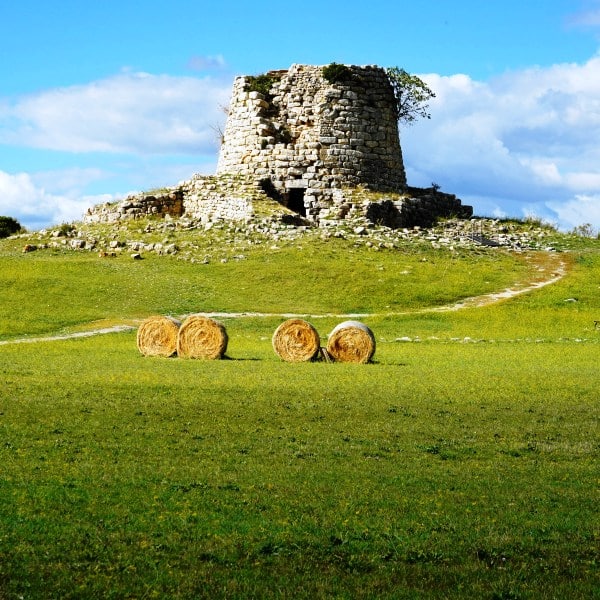
The nuragic heritage at Barumini represents the most complete and best-preserved expression of a civilization that dominated Sardinia for over a thousand years — a culture that built in stone with an ambition and technical sophistication that still commands respect three millennia later. The site of Su Nuraxi di Barumini, a UNESCO World Heritage Site since 1997, is the most visited nuragic monument on the island and the one that most clearly conveys what the nuragic civilization actually built: a massive central tower surrounded by a bastion of four secondary towers, itself enclosed by the remains of a village of circular stone huts that was continuously inhabited from around 1500 BC to the early centuries AD. Standing inside the complex, surrounded by walls that in some places still rise to six or seven meters, is to be in direct physical contact with a civilization whose written records do not exist but whose architecture speaks clearly enough.
Su Nuraxi: The Architecture of the Nuragic Civilization
The central nuraghe at Barumini was built in successive phases over several centuries, each addition responding to changing needs and capabilities. The original tower, constructed around 1500 BC from blocks of dark basalt quarried from the nearby Giara plateau, is the oldest element — a single truncated cone of corbelled masonry that rises through three chambers stacked vertically, connected by an internal staircase cut into the thickness of the wall. The four-towered bastion was added around 1300 BC, enclosing the original tower within a curtain wall of extraordinary solidity. The outer village, whose circular huts cluster around the bastion like an organic growth from the stone below, represents the domestic life of the community that depended on the nuraghe for protection and identity. Archaeological excavations have revealed pottery, bronze figurines, weapons, and domestic objects that are now housed in the museum in the nearby Casa Zapata, a 16th-century Spanish manor house that has itself been converted into an archaeological museum built directly over a nuragic village discovered during its restoration.
The Giara di Gesturi: Wild Horses and Basalt Plateaus
A few kilometers north of Barumini, the Giara di Gesturi is a basalt plateau of extraordinary ecological value — a raised table of dark rock covered in cork oak forest, seasonal ponds, and the habitat of the Giara horse, a small semi-wild pony that has lived on this plateau since antiquity and represents one of the last wild horse populations in Europe. The Giara is accessible on foot or by mountain bike along tracks that cross the plateau between the ponds and the forest, and the combination of landscape, wildlife, and the silence of a high plateau above the surrounding plains makes it one of the most unusual natural destinations in Sardinia. The view from the edge of the Giara back toward Barumini and the Campidano plain below gives the nuragic towers a geographical context — the plateau was the source of their building material, the plain below the territory they controlled.
Barumini and the Sardinian Interior
The area around Barumini belongs to the Marmilla — a gently hilly agricultural region in the center-south of Sardinia that is among the least-visited parts of the island despite containing some of its most significant cultural heritage. The villages of the Marmilla are small, quiet, and largely unaffected by tourism — places where the rhythms of agricultural life continue alongside the prehistoric monuments that dot the surrounding fields. Travelling through this territory by self-drive reveals a Sardinia that is entirely different from the coastal landscapes most visitors come for, and entirely as rewarding in its own way.
Barumini in a Sardinia Self-Drive Itinerary
The Barumini nuragic heritage sits at the center of a Sardinian interior itinerary that can connect north toward Cagliari and the southern coast, or northwest toward the Campidano plain and the other major nuragic sites of the island. Combined with the nuragic sites of Arzachena in the northeast, a visit to Barumini completes a picture of the nuragic civilization across two very different Sardinian landscapes. Explore the full Sardinia region to see how Barumini connects with the broader island itinerary, from the coasts of the north to the interior plains of the south, on a complete self-guided tour of Sardinia.
Italy Trails at Barumini
Italy Trails builds the Barumini nuragic heritage into Sardinian self-drive itineraries with accommodation selected in the surrounding villages or in Cagliari, routes that connect the site with the Giara plateau and the other cultural landmarks of the Marmilla, and the local knowledge that makes the difference between a standard visit and a genuinely immersive experience. Contact our team to start planning, or learn more about how a self-guided tour works.
To provide the best experiences, we and our partners use technologies like cookies to store and/or access device information. Consenting to these technologies will allow us and our partners to process personal data such as browsing behavior or unique IDs on this site and show (non-) personalized ads. Not consenting or withdrawing consent, may adversely affect certain features and functions.
Click below to consent to the above or make granular choices. Your choices will be applied to this site only. You can change your settings at any time, including withdrawing your consent, by using the toggles on the Cookie Policy, or by clicking on the manage consent button at the bottom of the screen.