Taste Emilia Prosciutto: Three DOP Products That Changed the World
To taste Emilia prosciutto, balsamic vinegar, and Parmigiano Reggiano in the territory where they are produced is to understand why these three ingredients have become the most imitated and least successfully replicated food products in the world. The Emilia plain — the flat, fog-prone strip of land between the Po river and the Apennine foothills, running west from Bologna through Parma and Reggio Emilia to Piacenza — produces all three within a relatively compact area, and the conditions of that territory: the specific microclimate, the breeds of animal, the traditions of the people who work with these ingredients every day, explain why no imitation anywhere in the world comes close to the original. A food tasting tour through Emilia is not a luxury add-on to an Italian itinerary. It is one of the most direct encounters with Italian material culture available.
Prosciutto di Parma: The Art of Curing
The Prosciutto di Parma DOP is produced exclusively in the hills around Parma, where the specific air currents descending from the Apennines — the maestrale — have been used for centuries to dry and cure the hind legs of specially raised pigs. The production process is one of the most strictly regulated in Italian food culture: the pigs must be born and raised in specific regions of Italy, fed on a diet that includes whey from Parmigiano production, and slaughtered at a minimum weight and age. The curing process lasts a minimum of twelve months — the finest prosciutto is aged for twenty-four months or more — and the result is a ham of extraordinary delicacy, its fat sweet and yielding, its lean meat pink and barely salty. Visiting a prosciuttificio in the hills above Parma and tasting the product cut directly from the leg is the experience that no vacuum-packed slice in any shop anywhere in the world can replicate.
Aceto Balsamico Tradizionale: Time in a Bottle
The Aceto Balsamico Tradizionale di Modena DOP is produced in the attics of farmhouses and artisan producers in the Modena area from cooked grape must — the juice of Trebbiano and Lambrusco grapes — that is aged in a battery of progressively smaller barrels of different woods over a minimum of twelve years. The result is not a vinegar in any conventional sense: it is a dense, syrupy, intensely complex condiment of deep brown color and extraordinary balance between sweet and acid that is used in drops rather than spoonfuls. The traditional balsamic aged twenty-five years or more is one of the most expensive food products in the world per unit of volume, and tasting it directly from the acetaia — the aging room — alongside a sliver of Parmigiano is one of the most concentrated flavor experiences available in Italian food culture.
Parmigiano Reggiano: The King of Cheeses
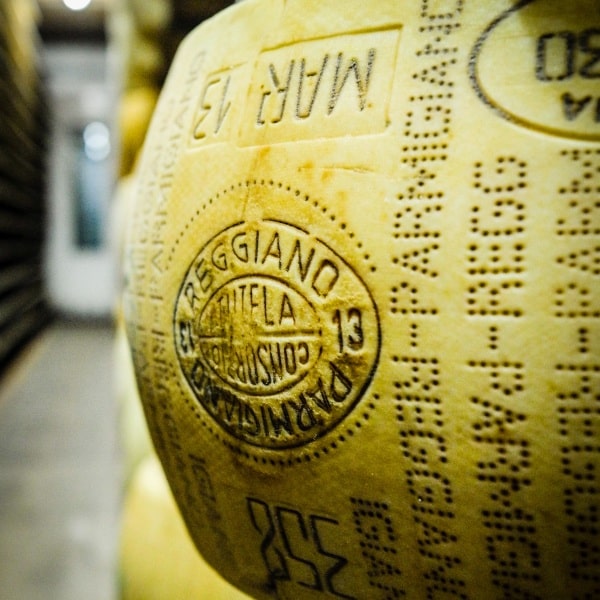
Parmigiano Reggiano DOP is produced in a zone that covers the provinces of Parma, Reggio Emilia, Modena, and parts of Bologna and Mantua, from the raw milk of specific cattle breeds fed on local forage. Each wheel weighs approximately 40 kilograms and requires 550 liters of milk to produce — milk that comes from two milkings and is processed the same day without any additives or preservatives. The aging process ranges from twelve to over forty-eight months, with flavor and texture changing substantially across that range: the younger wheels fresh and milky, the older ones crystalline, intensely savory, and complex in ways that reward slow eating. Visiting a caseificio in the early morning — when the milk arrives and the curds are formed — and tasting wheels of different ages directly afterward is the complete Parmigiano experience.
Taste Emilia on a Self-Drive Tour
The prosciuttifici of Parma, the acetaie of Modena, and the caseifici of Reggio Emilia are all accessible by road from Bologna on a self-guided tour of Emilia-Romagna that can combine the food tastings with the Ferrari experience in Maranello and the culture of Bologna. Explore the full Emilia-Romagna region to plan your itinerary, then contact our team to start building your trip, or learn more about how a self-guided tour works.