
The Roads Are the Destination
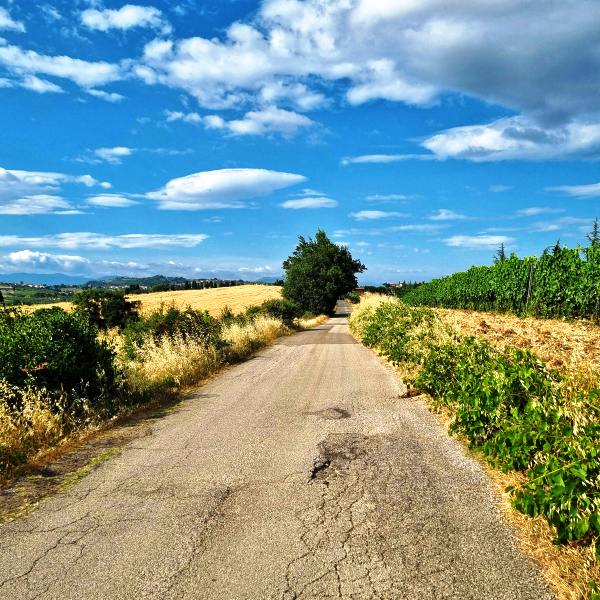
There is a version of Umbria that exists only from a car window, at the pace you choose, on roads that were never designed to be efficient. These are the roads that follow the contours of the hills rather than cutting through them — narrow, unhurried, lined with oak and cypress and the occasional stone farmhouse set back from a gravel track. Driving through Umbria’s countryside is not a means of getting between places. It is, in itself, the reason to be here. The region earns its reputation as Italy’s green heart not from any single landmark but from the accumulated weight of a landscape that seems deliberately composed: soft hills, hilltop villages, fields that change color with the season, and a quality of light in the afternoon that photographers spend careers chasing.
What the Countryside Holds
Away from the main roads and the well-signposted routes, Umbria reveals a different pace. The valley of the Tevere opens into wide agricultural plains framed by forested ridges. The hills between Spoleto and Todi are dense with olive groves and vineyards that have been worked by the same families for generations. The Valnerina cuts east into the Apennines, following the Nera river through a landscape that feels genuinely remote — medieval abbeys, cliff-edge villages, water that runs clear over limestone. North of Perugia, the roads toward Città di Castello pass through a countryside that has changed little since the Renaissance painters who grew up here used it as a backdrop. Each of these routes rewards a slow driver more than a fast one.
Towns Worth the Detour
The self-drive experience in Umbria is anchored by towns that earn a stop without requiring a full day. Bevagna preserves a Roman and medieval streetscape almost entirely intact — a Roman mosaic floor sits beneath a bar, and the central piazza has not been modernized into irrelevance. Spello cascades down a hillside in pink stone, its alleys draped in flowers. Todi sits on a commanding ridge with views in every direction and a piazza that architectural historians consistently rank among the finest in Italy. Norcia, to the east, is the home of the norcino tradition — cured meats, black truffles, and a food culture that extends well beyond its modest size. None of these towns require advance planning. They are the kind of places that work best when you arrive without a schedule.
Roads of Umbria’s Countryside by Self-Drive Tour
A self-drive tour of Umbria’s countryside connects naturally with the region’s other experiences — wine tasting in Montefalco, an afternoon at Lake Trasimeno, or a longer loop through the full Umbria region. The roads between these points are rarely the fastest option, but they are consistently the best one. Italy Trails designs self-guided tours around exactly this kind of travel — itineraries that use the countryside as a connective thread rather than an obstacle between sights.
Italy Trails in the Umbrian Countryside
Italy Trails plans your Umbria self-drive from the ground up — selecting accommodation in the countryside or within the walls of a hilltop town, mapping routes that prioritize landscape over efficiency, and providing the local knowledge that turns a good drive into a memorable one. Contact our team to start planning, or learn more about how a self-guided tour works.
To provide the best experiences, we and our partners use technologies like cookies to store and/or access device information. Consenting to these technologies will allow us and our partners to process personal data such as browsing behavior or unique IDs on this site and show (non-) personalized ads. Not consenting or withdrawing consent, may adversely affect certain features and functions.
Click below to consent to the above or make granular choices. Your choices will be applied to this site only. You can change your settings at any time, including withdrawing your consent, by using the toggles on the Cookie Policy, or by clicking on the manage consent button at the bottom of the screen.