
Jewish Culinary Rome: The Oldest Food Tradition in the City
Jewish culinary Rome is one of the most distinctive and historically rooted food traditions in Italy — a cuisine shaped by two thousand years of continuous presence in the city and by the constraints and the creativity of a community that developed its own culinary identity within the boundaries of the Roman Ghetto. The Jews of Rome are the oldest Jewish community in the Western world, predating the destruction of the Second Temple, and their food culture reflects that longevity: dishes that evolved over centuries from the ingredients available within the ghetto walls, adapted to the dietary laws of kashrut, and refined into a tradition that is recognizably Roman and recognizably Jewish at the same time. Eating in the Ghetto today — in the restaurants and bakeries that line the streets around the Portico d’Ottavia — is to taste that history directly.
The Ghetto and Its History
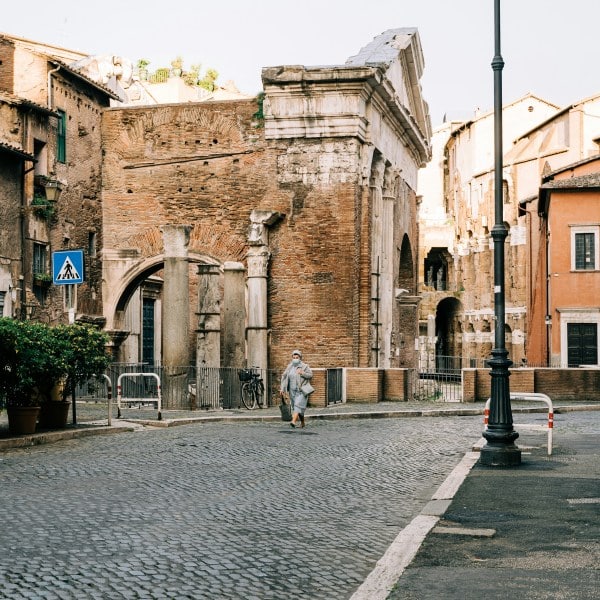
The Roman Ghetto was established in 1555 by Pope Paul IV, who confined the Jewish population of Rome to a small area on the left bank of the Tiber, subject to a series of restrictions and indignities that lasted, with varying degrees of severity, until the unification of Italy in 1870. The physical ghetto was demolished in the late 19th century and replaced by the present neighborhood of wide streets and Liberty-style buildings, but the community remained and the food culture survived the demolition intact. The Great Synagogue of Rome, completed in 1904 on the banks of the Tiber, anchors the neighborhood visually and symbolically, and the Jewish Museum adjacent to it documents the history of the community from antiquity to the present. Walking the streets between the synagogue and the Portico d’Ottavia — the ancient Roman portico that marks the western edge of the former ghetto — is to move through a neighborhood that carries its history on the surface rather than beneath it.
The Dishes: Carciofi, Baccalà, and Ricotta
The signature dish of Jewish Roman cooking is the carciofo alla giudia — the Jewish-style artichoke, deep-fried whole in olive oil until the outer leaves are crisp and golden and the inner heart remains tender. The technique, which requires a particular variety of artichoke — the cimarolo or mammola, grown in the Lazio countryside — and a considerable quantity of good olive oil, produces a result that is simultaneously simple and technically demanding, and that appears on virtually every menu in the Ghetto quarter. Baccalà — salt cod — is another staple of the tradition, prepared in multiple ways: fried in batter, cooked with tomatoes and pine nuts and raisins in the agrodolce style, or incorporated into pasta dishes that reflect the Spanish influence on the community during the centuries of Papal rule. Ricotta, both sweet and savory, appears in pastries and desserts that draw on the same agrodolce tradition — honey, cinnamon, and dried fruit combined in combinations that connect the Roman Jewish kitchen to the broader Sephardic and Middle Eastern food cultures from which it partly descends.
Jewish Culinary Rome on a Lazio Self-Drive
The Ghetto quarter sits at the center of Rome’s historic center, within walking distance of the Colosseum and the Roman Forum and easily combined with a broader exploration of the city before heading into the Lazio countryside. A self-guided tour of Lazio that uses Rome as its base can extend to the Etruscan sites, the volcanic lakes, and the hill towns of the region. Explore the full Lazio region to see how the city connects with the surrounding landscape, then contact our team to start planning, or learn more about how a self-guided tour works.
To provide the best experiences, we and our partners use technologies like cookies to store and/or access device information. Consenting to these technologies will allow us and our partners to process personal data such as browsing behavior or unique IDs on this site and show (non-) personalized ads. Not consenting or withdrawing consent, may adversely affect certain features and functions.
Click below to consent to the above or make granular choices. Your choices will be applied to this site only. You can change your settings at any time, including withdrawing your consent, by using the toggles on the Cookie Policy, or by clicking on the manage consent button at the bottom of the screen.