Gran Paradiso National Park: Italy’s First and Most Majestic Wilderness
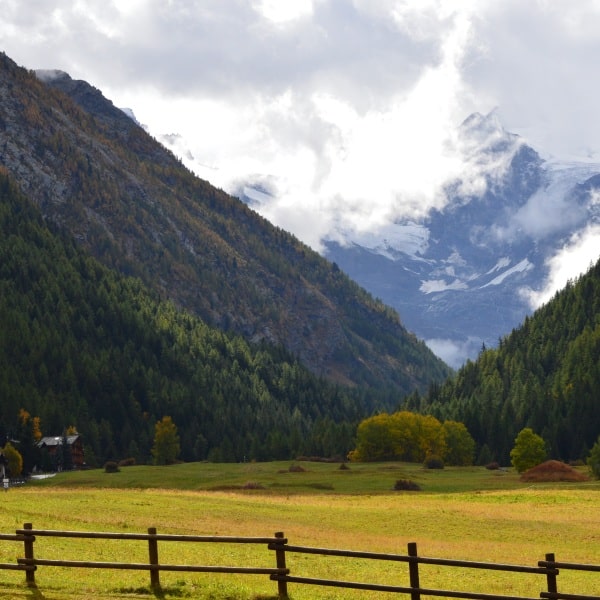
Gran Paradiso National Park is the oldest national park in Italy — established in 1922 from the former royal hunting reserve of the House of Savoy, and the only peak entirely within Italian territory that exceeds 4,000 meters. The Gran Paradiso massif rises above the valleys of the Aosta Valley and Piedmont to 4,061 meters, its glaciers, high-altitude lakes, and alpine meadows forming a landscape of extraordinary grandeur that was protected precisely because the Savoy kings valued it — and that survived intact precisely because that royal protection kept it free from the overgrazing and hunting that depleted wildlife across the rest of the Alps during the 19th century. The ibex population that now numbers in the thousands, and that is visible from the valley roads and the hiking paths with a regularity that astonishes first-time visitors, exists because of that protection — and because of a century of careful management since.
The Ibex: An Alpine Comeback Story
The Alpine ibex — the stambecco — is the animal that defines the Gran Paradiso experience. By the early 19th century it had been hunted to the edge of extinction across the entire Alps, surviving only in the Gran Paradiso territory under royal protection. The national park was created specifically to ensure its survival, and the recovery since then has been one of the great wildlife conservation success stories in European history: from a low of approximately 100 animals in the early 20th century to a current population of over 3,500 in the park alone, with colonies reintroduced across the Alps from this founding stock. The ibex are visible year-round on the rocky slopes above the valley floor — large, confident, entirely unafraid of human presence, the males distinguished by their massive curved horns that can reach 90 centimeters in length. Seeing a group of ibex on a rocky ridge above a glacier, with the Gran Paradiso summit behind them, is the image that most completely represents what this park offers.
The Valleys: Valsavarenche, Val di Cogne, and Val di Rhêmes
The Gran Paradiso National Park is divided into five main valleys, each with its own character and its own network of hiking trails. The Valsavarenche is the most direct access to the high mountain terrain — a narrow valley that climbs from the Aosta Valley floor to the refuges below the Gran Paradiso glacier, its upper section among the finest trekking landscapes in the park. The Val di Cogne is the most visited, its main village — Cogne — a mountain resort of considerable charm at the foot of the Valnontey, where a botanical garden of alpine plants and a resident population of ibex on the valley sides make even a short walk rewarding. The Val di Rhêmes, quieter and less developed than its neighbors, offers the most genuinely remote experience in the park — long valley walks through beech and larch forest, high-altitude wetlands, and the kind of silence that alpine wilderness produces at its best.
The Park and the Aosta Valley
The Gran Paradiso National Park occupies the southern edge of the Aosta Valley — a region of extraordinary alpine scenery that extends north toward Mont Blanc, the Matterhorn, and the Monte Rosa massif. A self-drive itinerary through the Aosta Valley that includes a day in the Gran Paradiso park covers the full range of what the region offers: Roman monuments in Aosta itself, medieval castles on the valley floor, wine estates producing the altitude-grown Blanc de Morgex, and the great mountain walls that frame the valley on every side. Explore the full Aosta Valley region to plan your itinerary on a self-guided tour of northern Italy, then contact our team to start building your trip, or learn more about how a self-guided tour works.
To provide the best experiences, we and our partners use technologies like cookies to store and/or access device information. Consenting to these technologies will allow us and our partners to process personal data such as browsing behavior or unique IDs on this site and show (non-) personalized ads. Not consenting or withdrawing consent, may adversely affect certain features and functions.
Click below to consent to the above or make granular choices. Your choices will be applied to this site only. You can change your settings at any time, including withdrawing your consent, by using the toggles on the Cookie Policy, or by clicking on the manage consent button at the bottom of the screen.