A Grape That Belongs to Nowhere Else
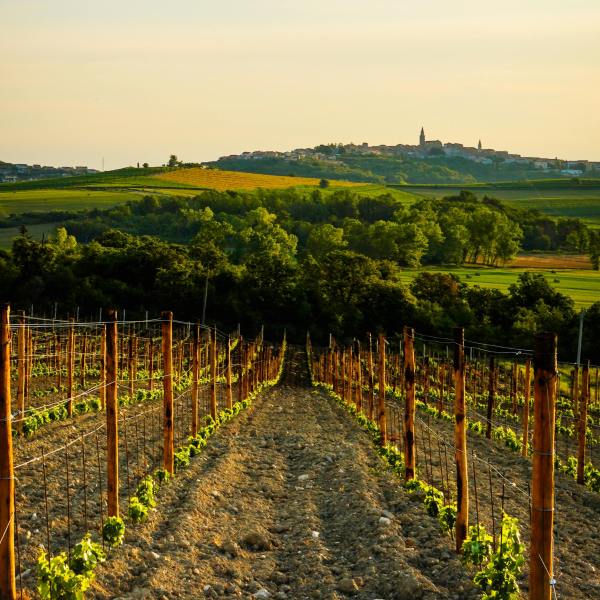
Sagrantino di Montefalco is one of Italy’s most singular wines — a red grown almost exclusively in a small cluster of hills in central Umbria, with a tannic structure and depth of flavor that sets it apart from anything produced in the surrounding regions. The grape itself is ancient, its origins debated but its presence in this corner of Umbria documented for centuries. What is not debated is its character: intense, full-bodied, with dark fruit, earthy notes, and a backbone of tannin that demands either time in the cellar or food on the table. The town of Montefalco sits elevated above the Spoleto valley, ringed by vineyards and olive groves, its medieval streets and stone towers largely unchanged since the 15th century. To taste Sagrantino here, in the territory where the grape evolved, is to understand why wine drinkers who discover it rarely forget it.
The Territory Behind the Bottle
The Montefalco DOCG encompasses a tight arc of communes — Montefalco, Bevagna, Gualdo Cattaneo, Castel Ritaldi, and Giano dell’Umbria — each contributing slightly different expressions of the same grape. The soils shift across this territory, from clay-rich valleys to hillside plots with better drainage and more concentrated fruit, and producers who know their land well use these differences deliberately. Beyond Sagrantino, the area produces Montefalco Rosso, a more approachable blend that showcases Sangiovese alongside the local varietal — a good introduction to the territory for those encountering Umbrian wine for the first time. A dry white from Trebbiano Spoletino has also drawn growing attention from sommeliers in recent years, adding another dimension to what Montefalco’s winemakers can do. The producers here tend to be small and family-run, and many welcome visitors directly into their cellars and estates, offering a kind of access to the winemaking process that larger wine regions rarely afford.
Montefalco in the Landscape of Umbria
Wine is only part of what makes this corner of Umbria worth slowing down for. Montefalco itself is known as the Ringhiera dell’Umbria — the balcony of Umbria — for the panoramic views it commands over the surrounding countryside. The nearby town of Bevagna preserves one of the most intact Roman and medieval streetscapes in central Italy, while Spello is draped in flowers and Romanesque stonework. The road between these towns winds through a landscape of vineyards, olive groves, and hilltop villages that seems designed for those traveling without a fixed schedule. Farther west, Lake Trasimeno offers a different kind of Umbrian afternoon — wide water, island villages, and a slower pace still. All of it connects naturally into a single itinerary for those exploring the Umbria region at their own rhythm.
Wine Country on a Self-Drive Tour
Montefalco and its surrounding estates fit naturally into a self-guided tour of central Italy — the kind of trip where the route is yours to shape and the stops are chosen for what they offer rather than how efficiently they fill a schedule. The roads through the Montefalco DOCG are quiet, the drives between estates short, and the countryside between them worth the detour in its own right. Traveling this way, wine becomes part of a broader experience of place rather than the sole reason for being here.
Italy Trails and the Wines of Montefalco
Italy Trails builds Montefalco wine experiences into your itinerary as a natural part of an Umbrian self-drive — with estates selected for quality and character, accommodation placed in the heart of wine country, and routes that follow the landscapes rather than the highway. Contact our team to start planning, or learn more about how a self-guided tour works.