
Reggio Calabria City Tour: Two Warriors That Changed Archaeology
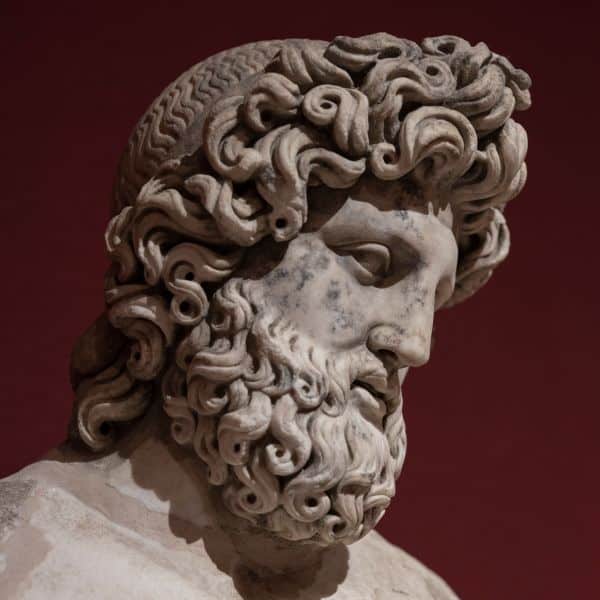
A Reggio Calabria city tour brings you to the tip of the Italian peninsula and to one of the most extraordinary encounters with ancient art available anywhere in the Mediterranean — the Bronzi di Riace, two bronze statues of such quality and presence that their discovery in 1972 changed the understanding of what ancient Greek sculpture could achieve. Recovered from the seabed off the Calabrian coast, they are displayed in the Museo Nazionale della Magna Grecia in a dedicated climate-controlled room, and the experience of seeing them in person is one of those encounters with ancient art that no photograph and no description adequately prepares you for.The Bronzi di Riace, recovered from the seabed off the Calabrian coast near the town of Riace, are life-size representations of two male warriors in full anatomical detail — musculature, veins, eyelashes, lips, teeth — cast in bronze with a technical mastery that places them among the finest works of sculpture from antiquity. They are displayed in the Museo Nazionale della Magna Grecia in Reggio Calabria in a dedicated climate-controlled room, and the experience of seeing them in person — their scale, their weight, the extraordinary specificity of their surfaces — is one of those encounters with ancient art that no photograph and no description adequately prepares you for.
The Bronzes: What We Know and What We Don’t
The two statues were found by a diver in August 1972 in approximately eight meters of water off the coast of Riace Marina, lying on the seabed in what appears to have been the cargo of a ship that sank in antiquity. They were transported to Florence for restoration — a process that took several years — and eventually transferred to Reggio Calabria, where they have been housed since 1981. Their date of creation is estimated at around 460-450 BC, placing them in the early Classical period of Greek sculpture, and their quality is such that several scholars have attributed them to the most celebrated sculptors of antiquity — Phidias, Polykleitos, Myron — though no attribution has been definitively established. Who they represent, why they were being transported, and where they were originally destined remain open questions that have generated a substantial body of scholarship without producing consensus. The mystery is part of what makes them compelling.
The Museum and the Magna Graecia Collection
The Museo Nazionale della Magna Grecia that houses the Bronzes is itself one of the most important archaeological museums in southern Italy, its collection documenting the Greek colonial civilization — Magna Graecia — that flourished along the coasts of Calabria, Basilicata, and Puglia from the 8th century BC onward. Reggio Calabria was itself a major Greek colony — Rhegion — founded in the 8th century BC and one of the most powerful cities of the western Greek world. The museum’s collection includes sculpture, ceramics, coins, jewelry, and architectural fragments from the major Magna Graecia sites of Calabria, providing the historical and cultural context that explains how two bronzes of such extraordinary quality came to be in these waters in the first place.
Reggio Calabria: The City and the Strait
The city of Reggio Calabria is built along a seafront promenade — the Lungomare Falcomatà, described by Gabriele D’Annunzio as the most beautiful kilometer in Italy — that looks directly across the Strait of Messina to Sicily, with Etna visible on the horizon on clear days. The strait here is only three kilometers wide, and the view across the water — with the Sicilian coastline close enough to seem touchable and the volcano rising beyond it — is one of the most distinctive urban panoramas in southern Italy. The city was almost entirely rebuilt after the earthquake of 1908 — one of the most destructive in European history — and its Liberty-style architecture and wide straight streets reflect that early 20th-century reconstruction rather than any medieval or Renaissance heritage.
Reggio Calabria on a Calabria Self-Drive
Reggio Calabria is the natural southern terminus of a self-guided tour of Calabria — a region of extraordinary natural and historical richness that extends north through the Aspromonte massif, the Costa Viola, and the Tropea coast toward the Sila plateau and the Ionian shoreline. Explore the full Calabria region to see how Reggio Calabria connects with the broader landscape of the toe of Italy, then contact our team to start planning, or learn more about how a self-guided tour works.
To provide the best experiences, we and our partners use technologies like cookies to store and/or access device information. Consenting to these technologies will allow us and our partners to process personal data such as browsing behavior or unique IDs on this site and show (non-) personalized ads. Not consenting or withdrawing consent, may adversely affect certain features and functions.
Click below to consent to the above or make granular choices. Your choices will be applied to this site only. You can change your settings at any time, including withdrawing your consent, by using the toggles on the Cookie Policy, or by clicking on the manage consent button at the bottom of the screen.