
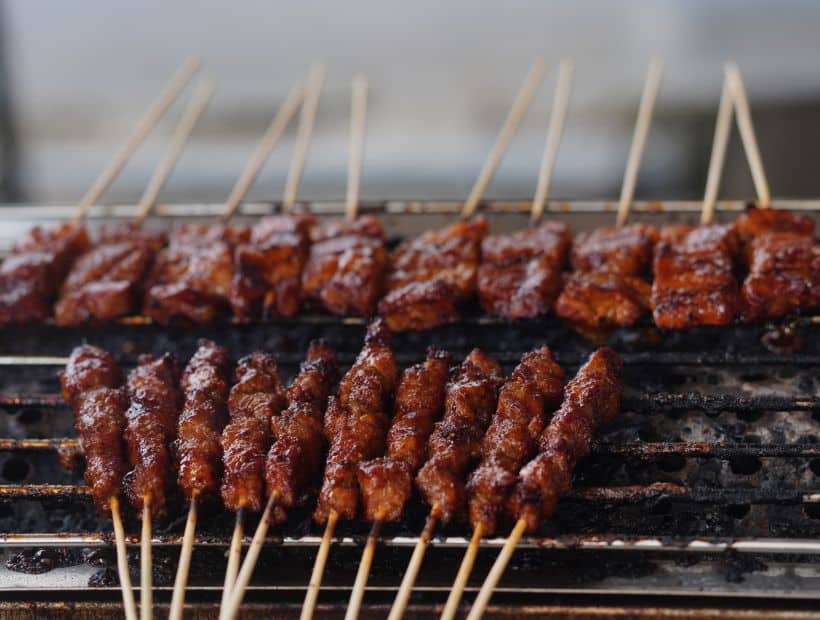
There is a smell in Abruzzo that you recognise before anything else. Not the scent of the sea, nor the fragrance of the beech forests. It is the sweet, fatty smoke of sheep meat cooking over charcoal — slow, dense, unmistakable. When you smell it, you know that somewhere nearby, someone is turning arrosticini abruzzesi — the small lamb skewers that have become the culinary symbol of the region. And you know that soon you will be eating them too, because in Abruzzo, arrosticini are never refused.
But how did this dish — so simple and so powerful — come to exist? The story of arrosticini abruzzesi is a story of shepherds and mountains, of necessity and ingenuity, of a food that for centuries was the meal of the poorest people in the region and that today has become the gastronomic symbol of an entire part of Italy.
The Origins: Shepherds and the Transhumance
To understand arrosticini, you need to understand the transhumance — the great seasonal migration of flocks that for centuries defined life in the mountains of Abruzzo. Every autumn, millions of sheep descended from the Abruzzo highlands toward the plains of Puglia along the tratturi — wide grassy tracks, some of which predate the Romans. In spring, the journey reversed. The shepherds walked for weeks, sleeping in the open, eating what they had.
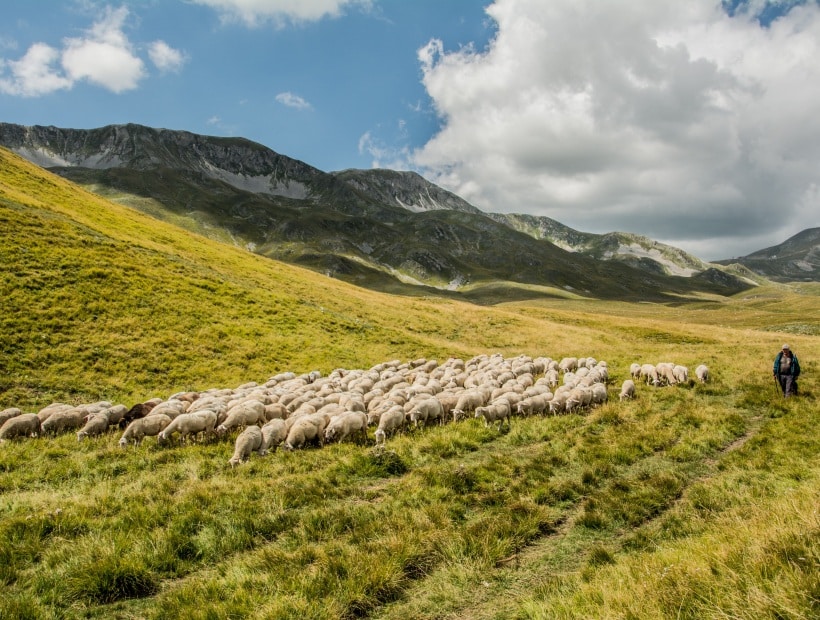
And what they had was sheep. The meat of the adult ewe — not lamb, which was too valuable to be eaten by the shepherds themselves — is a tough, fibrous meat with a strong flavor. It is not the meat a city chef would choose. But the shepherds of Abruzzo found a way to transform it into something extraordinary: cut it into very small pieces, thread it onto wooden sticks, and cook it quickly over a narrow, intense fire. The violent heat melted the fat, softened the fibers, and in a few minutes turned a difficult cut into a perfect bite — crisp on the outside, tender within, scented with smoke and mountain herbs.
No one knows exactly when this method was born. The first written accounts date from the nineteenth century, but the practice is almost certainly much older — perhaps medieval, perhaps older still. What we know is that the arrosticino was born in the mountainous interior of Abruzzo — between the Gran Sasso, the Majella, and the mountains of the national park — where sheep farming was the foundation of the economy and the sheep was everything: wool, milk, cheese, and, when necessary, meat.
The Fornacella: A Work of Genius
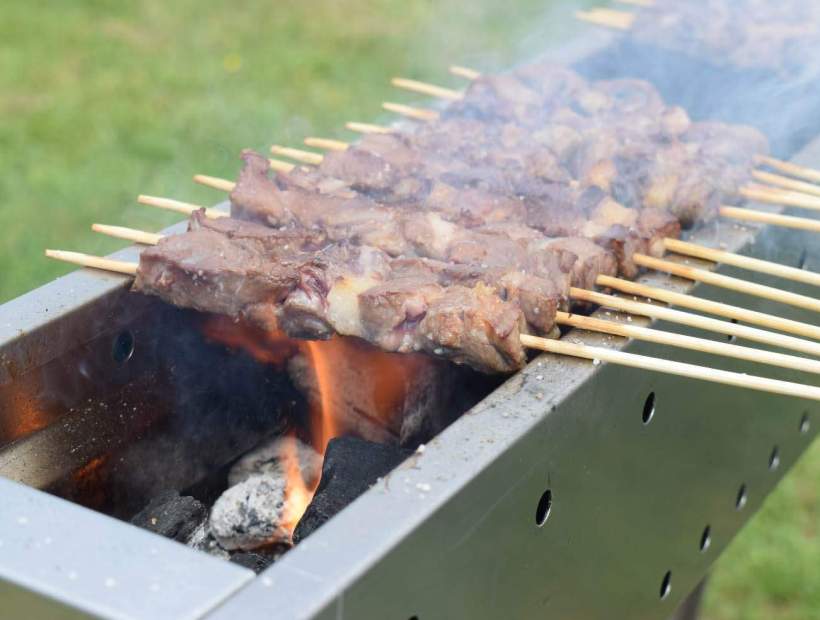
The arrosticino is not just about the meat. It is also about the way it is cooked. The fornacella — the elongated, narrow grill, typically made of iron or sheet metal, roughly sixty centimeters long and barely ten centimeters wide — is an invention that exists in no other culinary tradition in the world. Its narrow shape allows the skewers to be laid side by side, with the meat suspended above the coals and the wooden handles projecting beyond the edge, safely away from the heat.
This geometry is not accidental. The fornacella concentrates the heat upward, cooking the meat evenly and quickly. The fat that drips down falls onto the coals and produces small bursts of flame that smoke the exterior of the meat, creating the caramelised crust that is the signature of a perfect arrosticino. A shepherd could carry a collapsible fornacella, a few kilos of meat already cut and threaded onto skewers, and a sack of charcoal. In twenty minutes he had a hot meal for himself and his companions.
To this day, the fornacella remains the only acceptable instrument for cooking arrosticini. Anyone who puts them on a conventional barbecue grill is regarded, in Abruzzo, with the same expression that a Neapolitan reserves for someone who puts pineapple on pizza.
The Meat: Only Sheep, Only This Way
The authentic arrosticino is made from sheep meat — castrato, to be precise, the castrated male sheep. Castrato has a more decisive flavor than lamb but is less strong than the adult ewe, with a quantity of fat that is essential to the success of the skewer. The traditional cut calls for cubes of lean meat alternated with cubes of fat — the classic ratio is three pieces of lean to one of fat, but every family, every butcher, every restaurant has its own recipe.
The cutting of the cubes is an art in itself. They must be small — roughly a centimeter and a half on each side — and uniform, so they cook evenly. The most traditional producers still cut by hand, one by one, with a sharp knife. Modern butcher shops use machines, but the result is never quite the same. The skewer is wooden — never metal. Wood does not conduct heat and allows you to hold the arrosticino in your hand without burning yourself, turning it with your fingers while the other end cooks over the coals.
And then there is the question of seasoning. The traditional arrosticino has no seasoning. None. Only salt, after cooking. No marinades, no spices, no oil. The meat speaks for itself. Some people add a drizzle of extra virgin olive oil and a pinch of chilli — but this is already considered an innovation, and like all innovations in matters of food, it is received in Abruzzo with suspicion.
From Shepherd Food to the Symbol of a Region
For centuries, arrosticini abruzzesi remained a food of the mountains — the meal of shepherds, farmers, and the families who lived in the interior of Abruzzo. On the coast and in the cities, they were barely known. The transformation came after the Second World War, when Abruzzo underwent the same upheaval that changed all of Italy: urbanisation, the depopulation of the mountains, and the emergence of a middle class that rediscovered rural traditions as a form of identity.
In the 1960s and 1970s, village festivals began putting arrosticini at the centre of the celebration. City butcher shops started selling the skewers ready for cooking. The trattorias of Pescara and Chieti added them to their menus. The decisive moment came when arrosticini left Abruzzo: first to Rome, where the Abruzzese community is enormous, then to the rest of Italy. Today they can be found everywhere — in supermarkets, in restaurants, at food festivals across the country. But the real ones, made with castrato and cooked on the fornacella, remain an experience that only makes sense in Abruzzo.
Where to Eat the Real Thing
The honest answer is: anywhere in Abruzzo, as long as there is a fornacella burning. The best arrosticini are often eaten in the simplest places — a butcher shop with a few tables outside, a village bar with the fornacella in the courtyard, a mountain festival where you order by the dozen and eat standing up, with your hands, a glass of Montepulciano d’Abruzzo in the other.
The historic heartland of the tradition lies in the mountains of the interior — the valleys between the Gran Sasso and the Majella, the area around Sulmona, and the foothills on both sides of the central massifs. But today every corner of Abruzzo has its trusted arrosticinaro, and every Abruzzese is ready to swear that the ones from their village are the best.
There is one unwritten rule: arrosticini are eaten by the dozen, not by the unit. Ordering two or three is an insult. The minimum acceptable quantity for one person is a dozen. Two dozen is the norm. Three dozen is not unusual. There is no upper limit.
Arrosticini and the Journey
Eating arrosticini abruzzesi in Abruzzo is not just a meal — it is an experience that tells the story of a region. The story of shepherds who walked the ancient tratturi, of mountains that protected a culture for centuries, of people who turned necessity into culinary art. And like all the best things in Abruzzo, the finest arrosticini are found at the end of a road that only a car can travel — a mountain butcher shop, a hidden trattoria, a fire burning in a stone courtyard.
Discover Abruzzo with Italy Trails — a self-drive journey through the mountains, the villages and the coast. And stop, every time the scent of smoke and sheep tells you that somewhere nearby, someone is turning arrosticini.
Italy Trails designs personalised self-drive tours through Abruzzo and every region of Italy.