
Every journey to Lazio passes through Rome, and Rome alone could justify a lifetime of travel. But Lazio is a region of extraordinary depth beyond its capital — a landscape of volcanic lakes, Etruscan cliff cities, medieval hill towns, Roman ruins scattered across fields and forests, and a countryside that has fed and inspired the city for three thousand years. To drive through Lazio is to understand where Rome came from, and what has survived it.
The region stretches from the Apennines in the east to the Tyrrhenian Sea in the west, from the border with Tuscany and Umbria in the north to the edge of Campania in the south. Within those boundaries lie some of the most remarkable landscapes and historical sites in the country — most of them visited by a fraction of the tourists who crowd the Colosseum.
Rome does not need an introduction, but it deserves one that goes beyond the obvious. Yes, the Colosseum, the Forum, the Sistine Chapel, the Pantheon — these are among the greatest human creations on earth, and no description does them justice. But Rome is also the city of neighbourhood markets and neighbourhood trattorias, of Baroque fountains at the end of narrow alleys, of early mornings in Trastevere when the streets are empty and the light is golden and the whole city feels like it belongs to you. Rome rewards the traveller who slows down. And a self-drive tour, with accommodation in the city and the freedom to explore beyond it, is the best way to do both.
South of Rome, in the Colli Albani, the small towns of the Castelli Romani have been the summer retreat of popes and emperors since antiquity. Frascati, Castel Gandolfo, Nemi, Velletri — each one has its own character, its own wine (Frascati is the most famous), and views over Rome and the Roman countryside that make you understand the city in a way that no museum can. The drive through the Castelli on a Sunday morning, when the villages are full of Romans who have come for the porchetta and the local wine, is a ritual as old as the hills themselves.
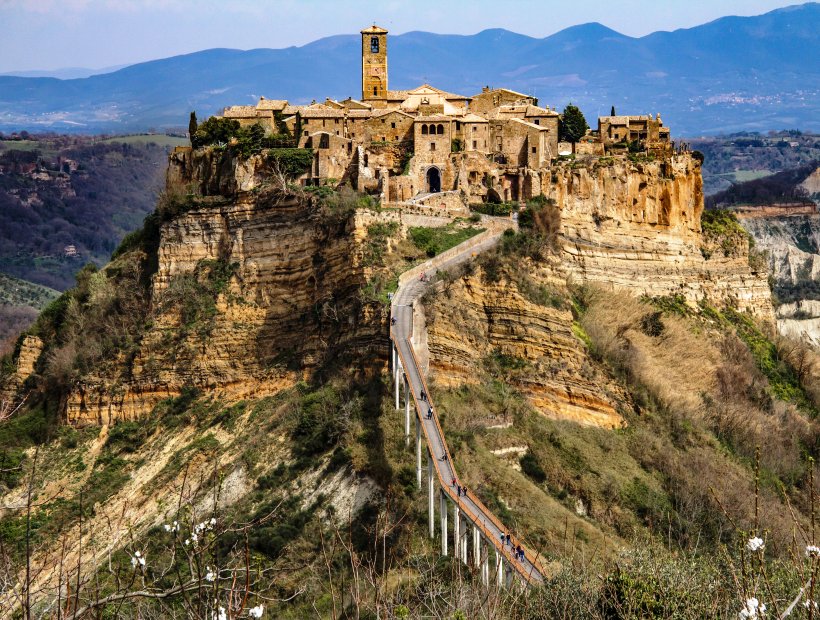
North of Rome, in the territory once called Etruria, the landscape changes dramatically. The volcanic plateau of the Tuscia is cut by deep ravines, and in those ravines and on the clifftops above them, the Etruscans built their cities two thousand five hundred years ago. Tarquinia, Cerveteri, Vulci, Sutri — the Etruscan necropoli are extraordinary: painted tombs cut into the tufa rock, still vivid after twenty-five centuries. Civita di Bagnoregio — a village on a tufa pinnacle, accessible only by a footbridge, slowly eroding into the valley below — is one of the most dramatic sights in all of Italy.
Lazio has three major volcanic lakes — Bolsena, Bracciano, and Vico — and each one is a world apart from the crowds of the coast. Lake Bolsena, the largest volcanic lake in Europe, is surrounded by medieval towns and Etruscan sites. Lake Bracciano, closer to Rome, offers swimming and sailing in crystal-clear water. Lake Vico, the smallest and most beautiful, sits inside a volcanic crater surrounded by chestnut forests. Driving the shore roads of these lakes, stopping for a lakeside lunch, is one of the simple pleasures of Lazio that most visitors never discover.
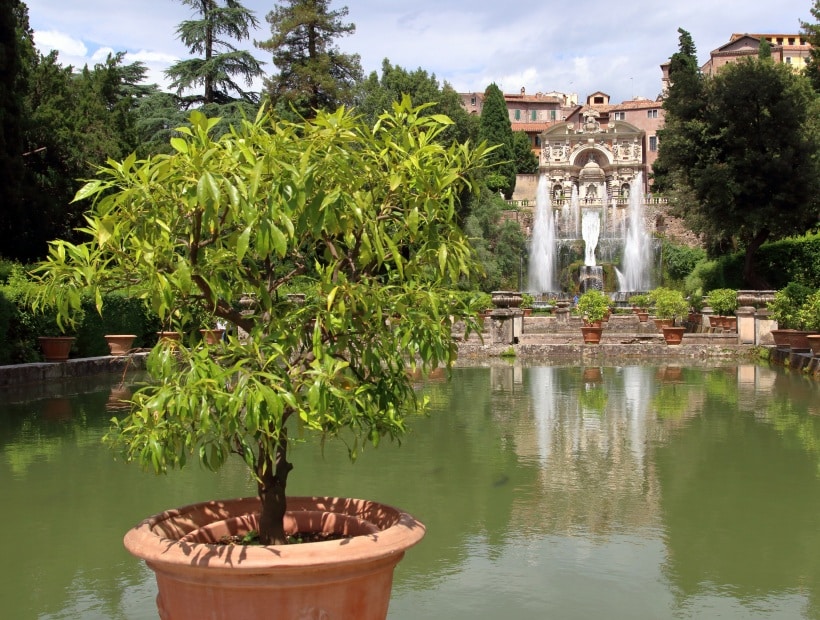
Viterbo was the seat of the papacy in the thirteenth century, and its medieval quarter is one of the best preserved in Italy. The Palazzo dei Papi, the Gothic churches, the ancient thermal baths — Viterbo rewards a full day of exploration. Nearby, the Villa Lante at Bagnaia and the Villa Farnese at Caprarola are two of the greatest Renaissance gardens in Italy, set in landscapes that have barely changed since they were created.
Roman cuisine is one of Italy’s great culinary traditions — honest, direct, and deeply satisfying. Cacio e pepe, carbonara, amatriciana, coda alla vaccinara — dishes that have been made in this city for centuries and are done best in small trattorias where the menu is handwritten and the wine comes in a carafe. Beyond Rome, Lazio offers porchetta (slow-roasted pork, the pride of Ariccia), Castelli Romani wines, lake fish from Bolsena and Bracciano, and the truffles and chestnuts of the Tuscia hills.
Spring (April–May) is the finest season. Rome is at its most beautiful before the summer crowds arrive, the countryside is green, and the Castelli Romani are in full bloom.
Autumn (September–October) brings harvest season, cooler temperatures, and the funghi and chestnut season in the Tuscia. Excellent for driving and for exploring the Etruscan sites without heat.
Summer can be hot in Rome, but the lakes and the hill towns provide cool refuges. The city itself is less crowded in August than in June or July.
Winter is mild and crowd-free. Rome’s museums and archaeological sites, the Etruscan tombs, and the medieval towns of the Tuscia are all best appreciated in the quiet months.
Lazio is the perfect region for a self-drive tour that uses Rome as a base and explores the extraordinary landscape around it. A week in Lazio can combine two days in Rome with the Castelli Romani, the Etruscan cities of the Tuscia, the lakes, and Viterbo — a journey through three thousand years of Italian history, all within an hour’s drive of the capital.
Italy Trails designs personalised self-drive tours through Lazio, selecting accommodation in Rome and in the countryside, planning routes that avoid the tourist crowds and find the Lazio that most visitors miss. The region also connects naturally with Tuscany to the north and Campania to the south for a wider central Italy journey.